Connect Amazon Vendor Central to Google Sheets: Step by Step Tutorial

Summarize this blog post with:
Amazon Vendor Central gives you the tools to manage your product sales, monitor performance, and identify opportunities to grow your business. But as your vendor operations expand, keeping track of sales and measuring ROI across multiple accounts can become challenging. This is where the Amazon Vendor Central reporting tool comes in.
In this guide, I’ll show you how to connect Amazon Vendor Central to Google Sheets using Two Minute Reports. By the end, you’ll be able to create and automate Amazon Vendor Central reports in Google Sheets and optimize sales performance.
How to Connect Amazon Vendor Central to Google Sheets?
You can connect Amazon Vendor Central to Google Sheets through the Two Minute Reports Hub. It is your workspace for managing and organizing your data in one place. Here’s how to get started:
Step 1: Creating a Connection
1. Go to hub.twominutereports.com. Click the Two Minute Reports Hub dropdown in the top-right corner to view and select the Connections & accounts option.


2. Click +Create Connection. Select Amazon Vendor Central from the list of connectors and click Next.
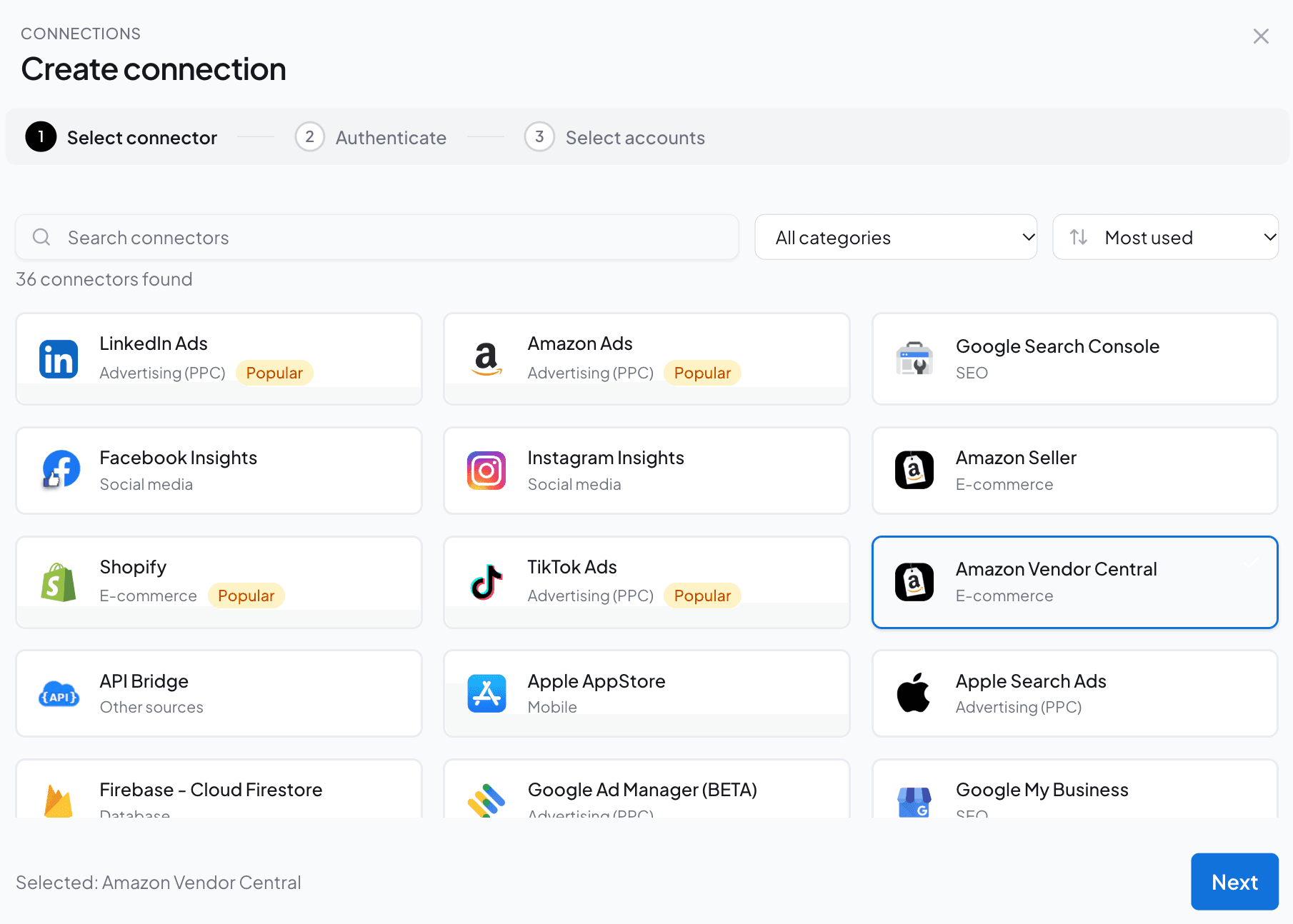
3. Authorize your connection by specifying the login details. Enter a name for your connection and select the marketplace that you want to report on under Select Vendor Region.
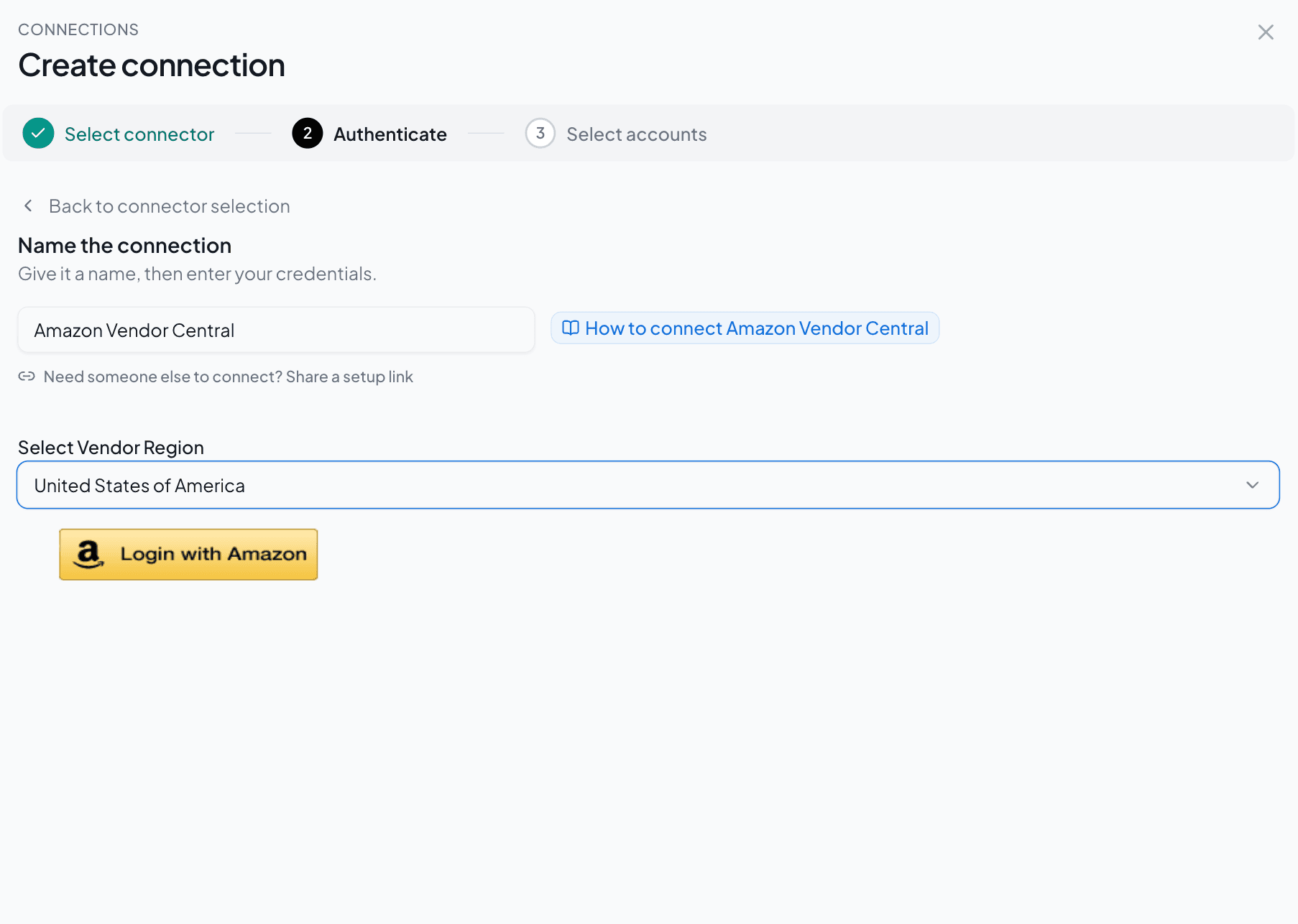
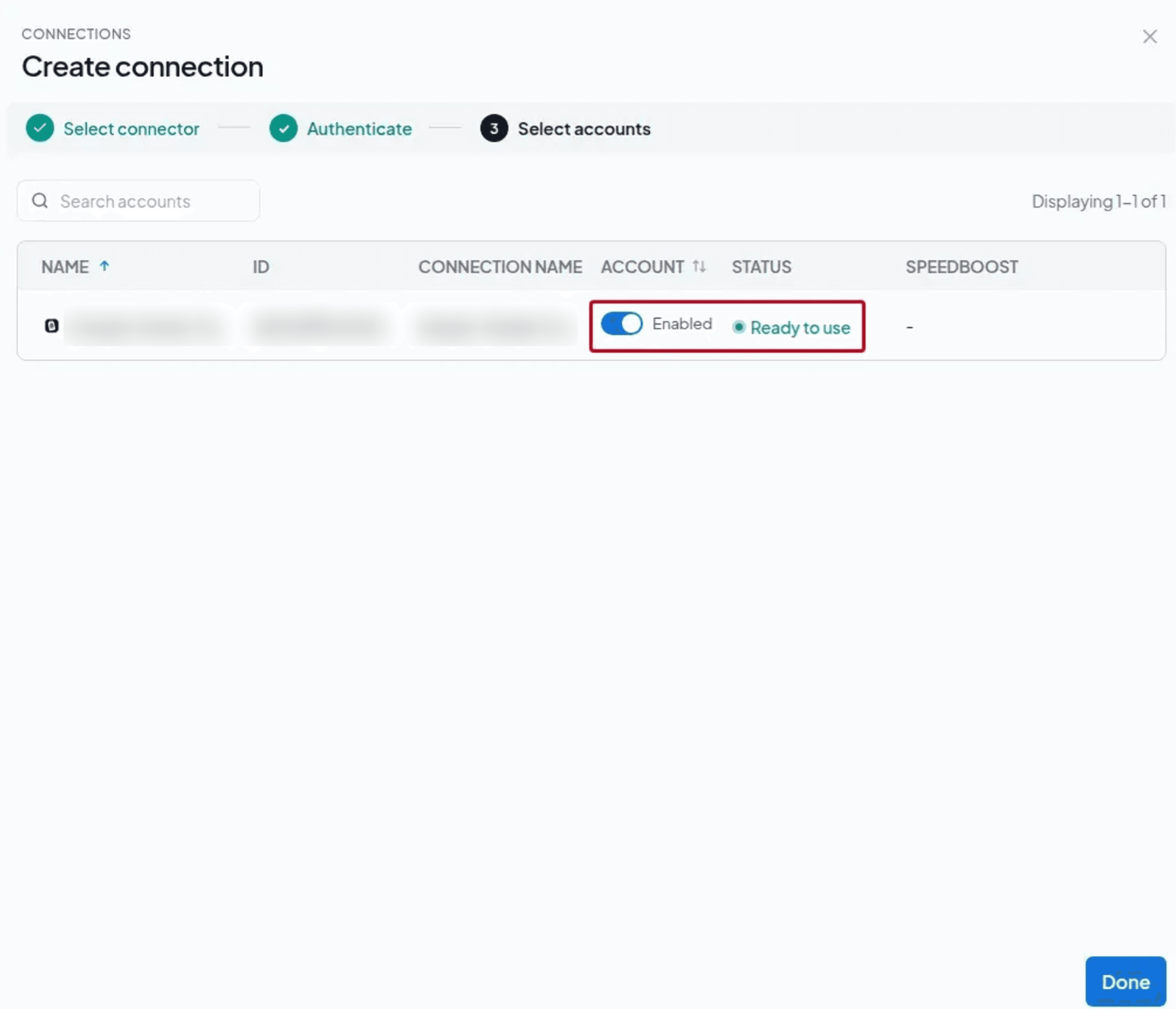
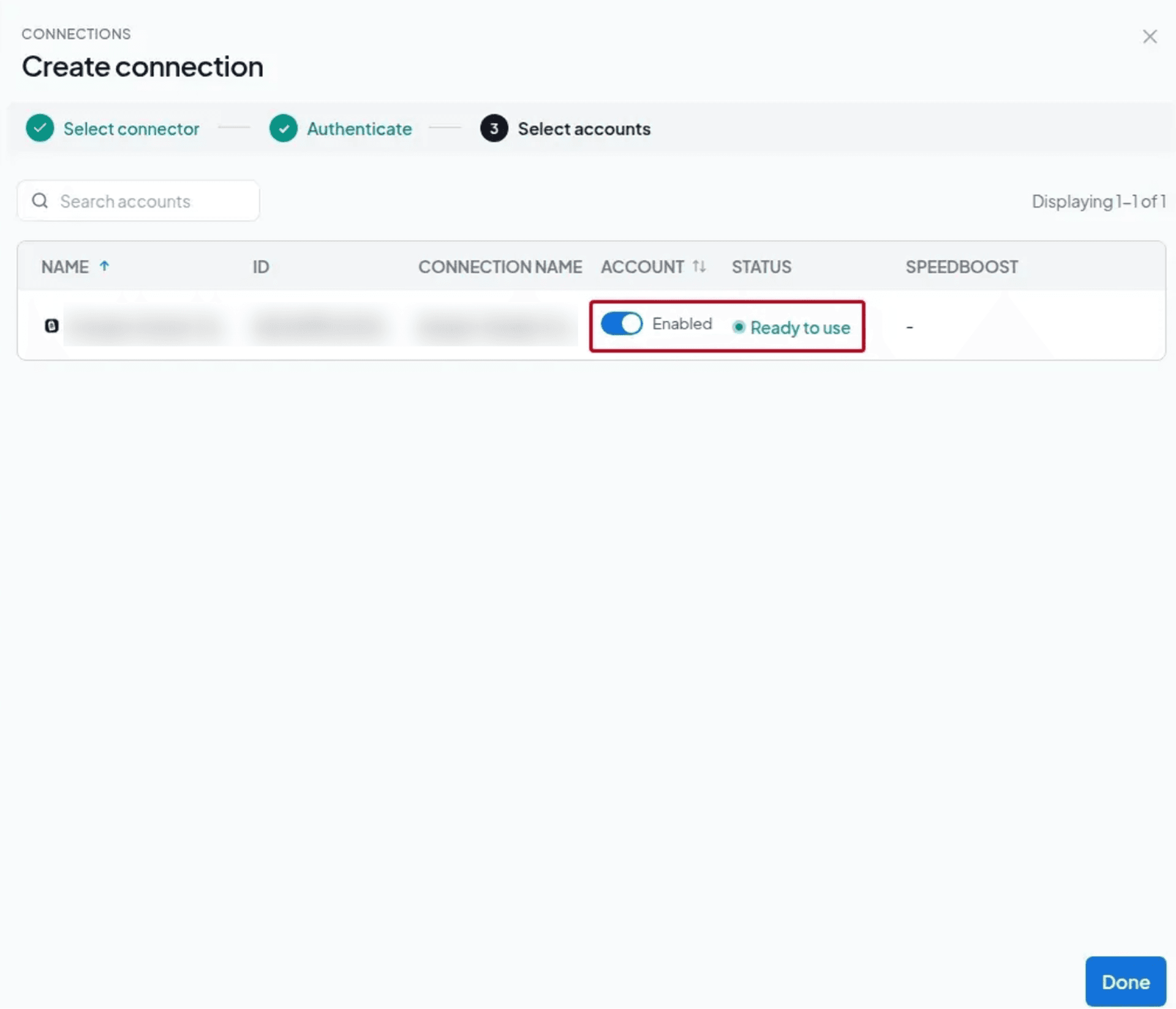
4. Once done, enable the accounts for which you want to track and measure your marketplace performance. Please note that you cannot fetch data from the disabled accounts.
5. Next, click the Two Minute Reports dropdown and select Google Sheets. Click +Create Spreadsheet.
6. Click Use Template and follow the on-screen instructions to launch the Two Minute Reports add-on in your spreadsheet.
Step 2: Configure and Run Your Query
1. Once you’ve installed the add-on, navigate to Menu → Data Queries and click Add.
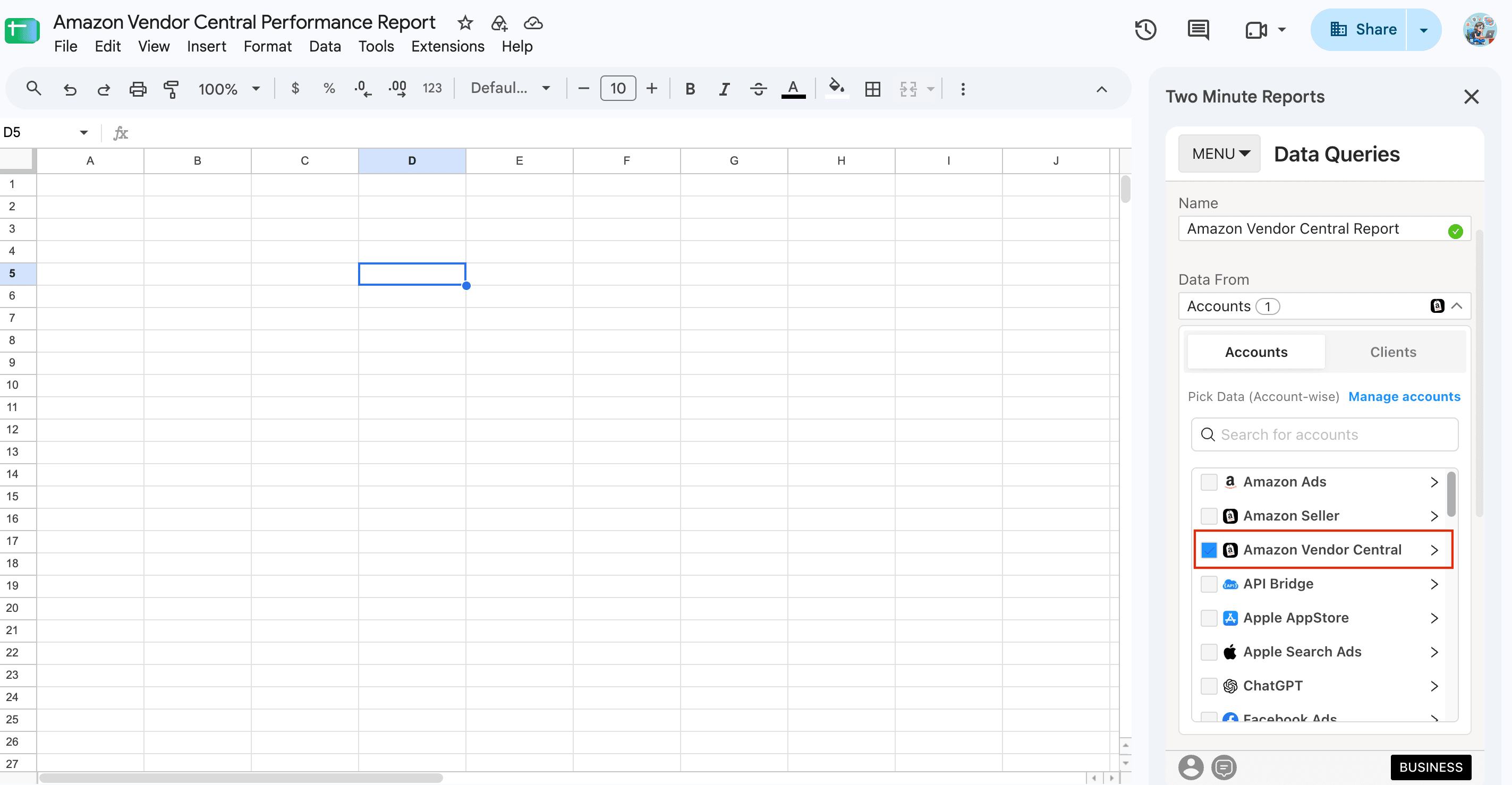
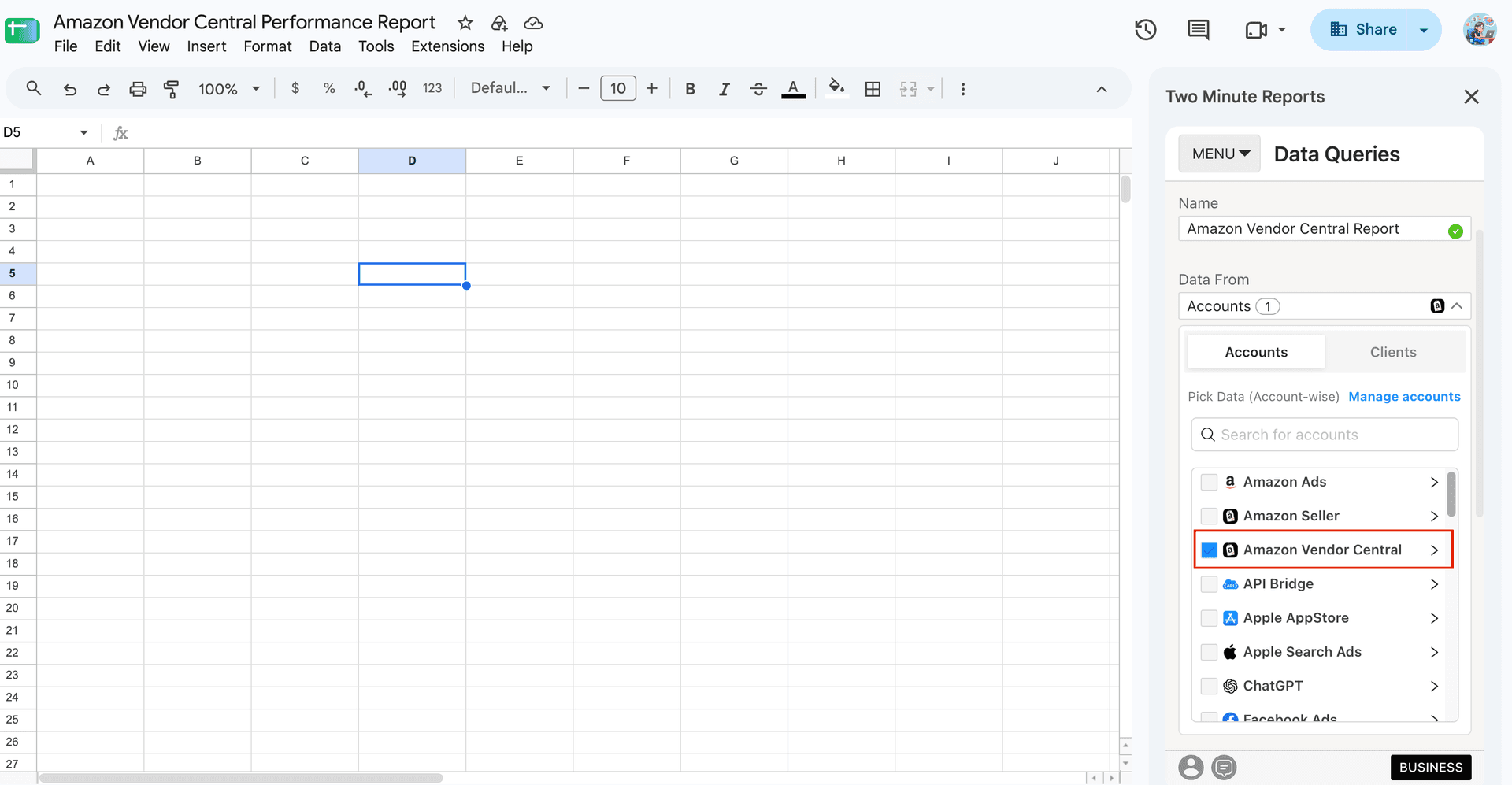
2. Select the Amazon Vendor Central accounts you want to include from the sidebar.
3. If you’re managing multiple clients, go to Clients → Manage Clients (in the sidebar), map your Amazon Vendor Central accounts to the relevant clients and click Save & Close.
4. Next, choose the relevant Amazon Vendor Central metrics and dimensions to be included.
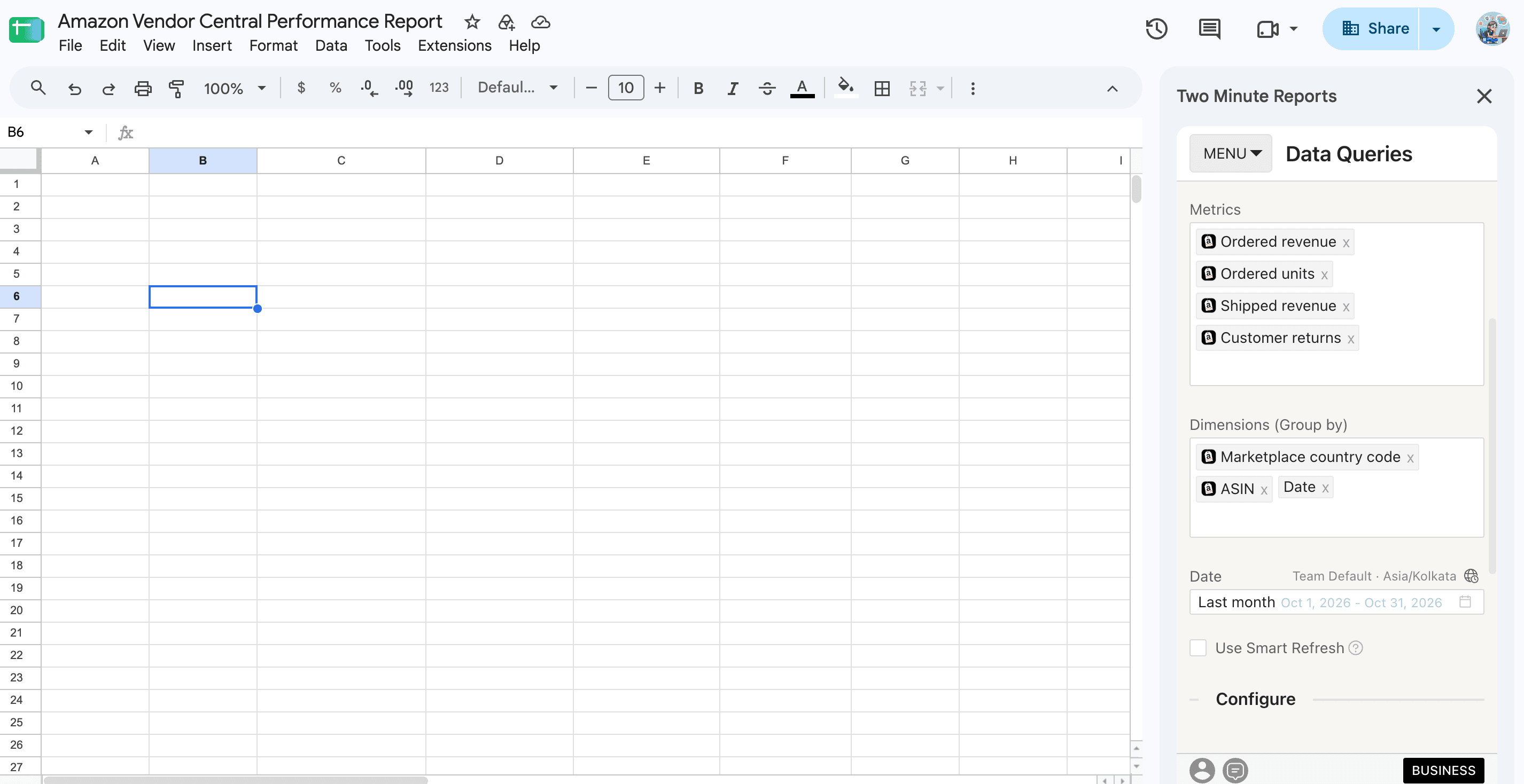
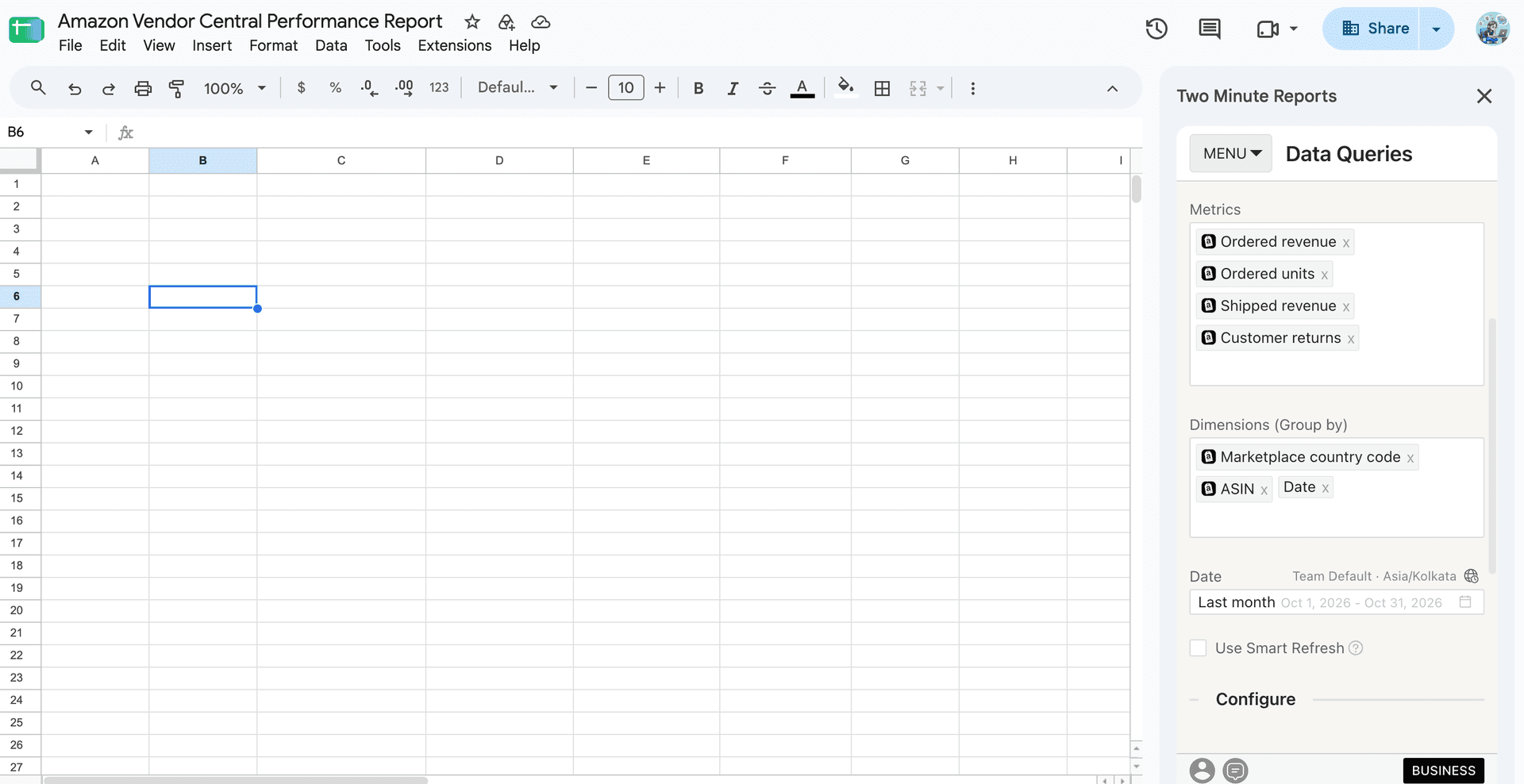
5. Click Run Query to pull the data into your chosen sheet and cell. Now you can see the insights populated in your Google Sheets report.
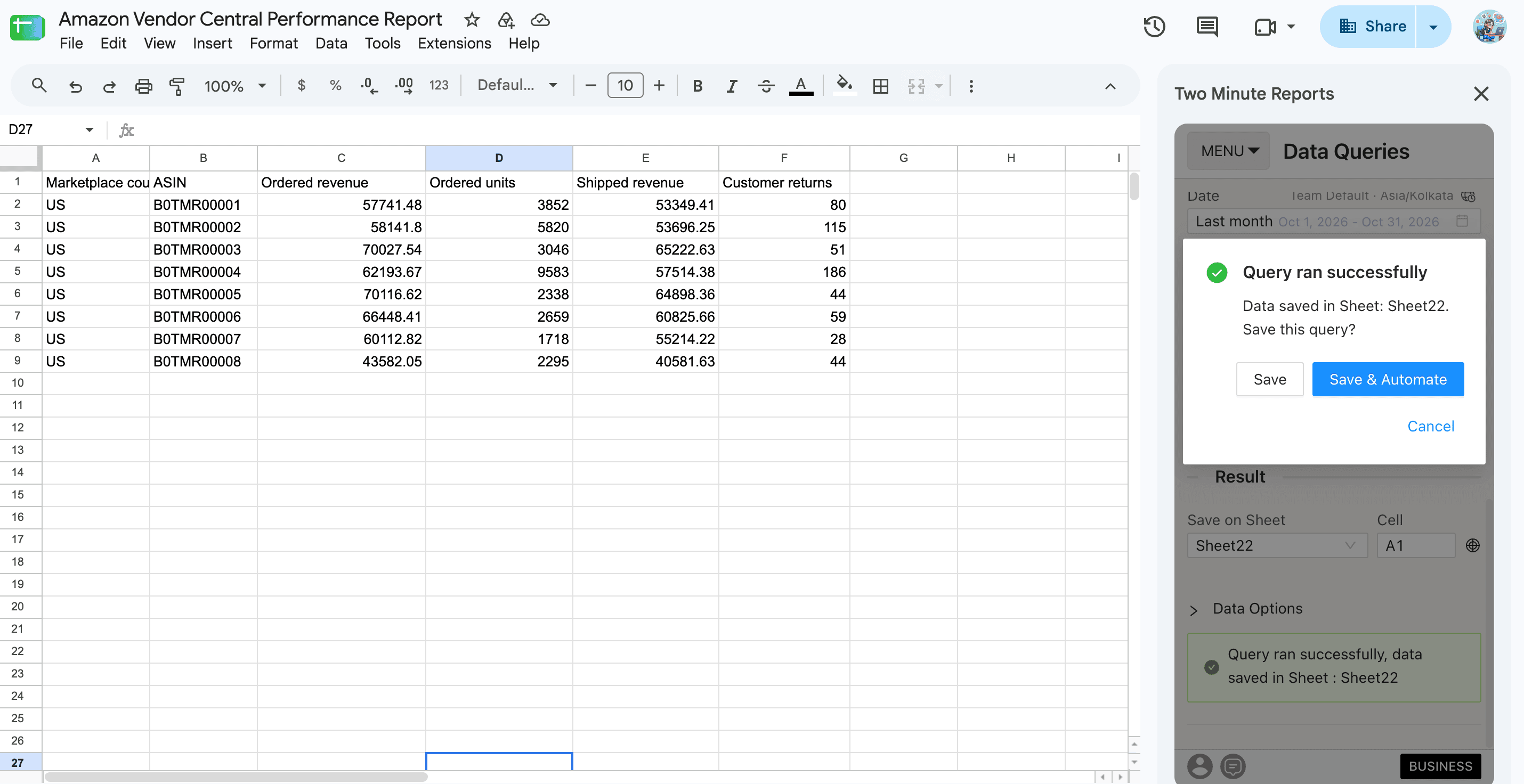
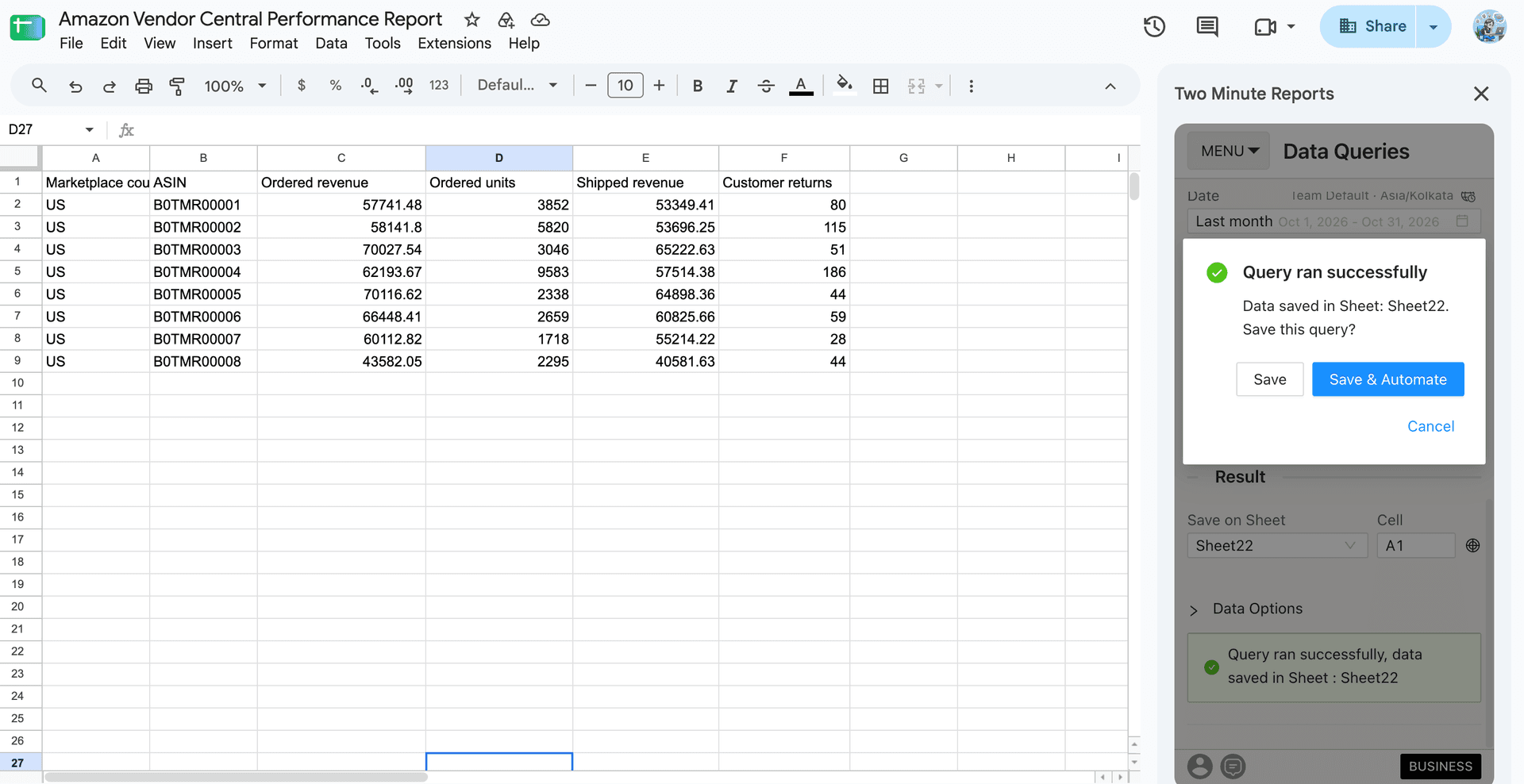
Now that you have the report, the next step is to automate it. Let’s have a look at it in the next section.
How to Automate Amazon Vendor Central Reporting in Google Sheets?
You can either click Save & Automate as shown in the above screenshot or navigate to Menu → Schedule Refresh. Either way, the steps remain the same. For now, let’s click Save & Automate. Then follow the steps below:
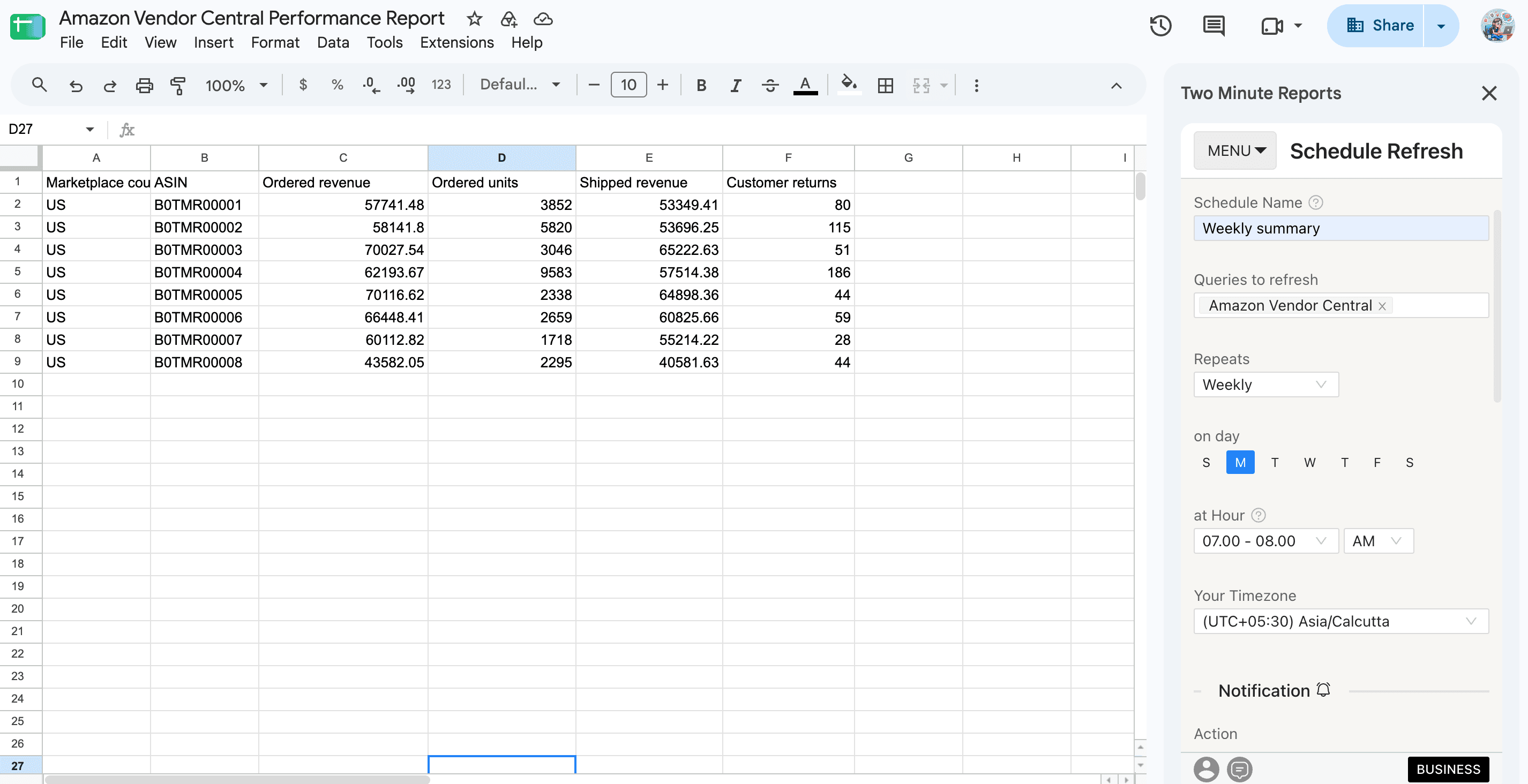
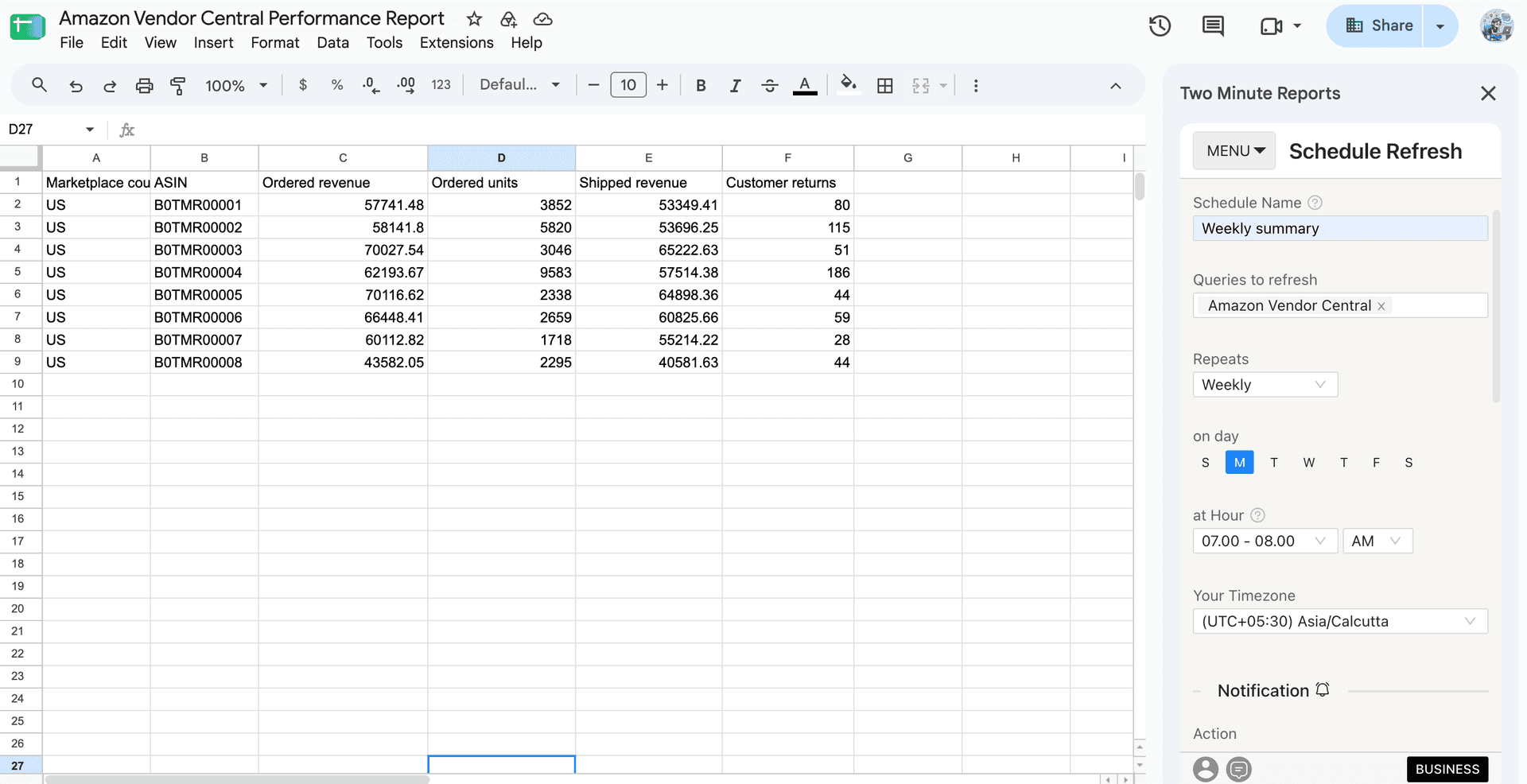
- First, enter your schedule name.
- Next, select the queries to include in this schedule. You can choose multiple queries if you want them to refresh on the same schedule.
- Then, choose how often you want to refresh – hourly, daily, weekly and monthly.
- Specify the exact time and time zone for the refreshes to occur.
Once you are done with the above steps, you can set up your reports to be delivered via email. Here’s how you can:
- To enable email delivery, move the toggle to ‘Email’.
- Next, select the Sheet to report.
- Enter the email addresses of your recipients – your clients, team members or stakeholders.
- Select whether you need to attach the report as a PDF, Excel/CSV or both.
- Write a customized email subject and body message to include with each report.
And that’s it. Your schedule is now saved. From here on, you will receive the latest sales insights in your inbox automatically.
Ready to Connect Amazon Vendor Central to Google Sheets?
By connecting your Amazon Vendor Central data to Google Sheets, you can analyze sales, revenue and inventory performance across your marketplaces in one place. With unlimited scheduled refreshes, you can automate your Amazon Vendor Central reports at custom intervals and receive the latest marketplace insights at your fingertips.
Try Two Minute Reports free for 14 days and see how you can turn your Amazon Vendor Central data into actionable reports to increase revenue.
Frequently Asked Questions
You can connect Amazon Vendor Central data to Google Sheets through the Two Minute Reports Hub or by installing the Two Minute Reports add-on from the Google Workspace Marketplace. Once connected, enable the Amazon Vendor Central accounts you want to track, launch the TMR add-on in your spreadsheet, select the metrics and build a custom Amazon Vendor Central report in Google Sheets.
You can track key metrics such as Ordered Revenue, Ordered Units, Shipped Revenue, Shipped COGS, Customer Returns, Mean Forecast Units, Net Received Inventory Units, etc. You can also break down your data using dimensions such as Vendor ID, Marketplace ID, Marketplace country, ASIN, Forecast start/end date, and build marketplace analytics reports in minutes.
With Two Minute Reports’ Amazon Vendor Central reporting tool, you can schedule unlimited data refreshes. Go to Menu → Schedule Refresh, choose the queries you want to refresh, select your frequency and enter the recipient email addresses. Your Amazon Vendor Central reports will then automatically refresh and can be delivered to your clients or stakeholders at scheduled intervals.
Yes. Agencies can connect multiple Amazon Vendor Central accounts and organize them by client. You can select relevant accounts when creating queries and build client-specific reports. Track sales, inventory, product performance, and demand forecasts across multiple clients from one reporting workflow.
Yes. You can try Two Minute Reports free for 14 days. During the free trial, you can connect your Amazon Vendor Central account to Google Sheets, explore the available metrics, create custom reports and schedule automated refreshes to see how the platform fits your reporting workflow before committing.

Meet the Author
Shalini MuruganShalini is driven by ideas that create a tangible impact. At Two Minute Reports, she specializes in content that helps marketers optimize their reporting workflows. When she's not transforming complex data into meaningful insights, you might find her lost in a book, jotting down ideas in her notebook, or connecting the dots others overlook.