
Summarize this blog post with:
The era of effortless growth through ads and basic dashboards is officially over. As we move through 2026, the ecommerce landscape is defined by razor-thin margins and a post-cookie world where traditional tracking often fails. Success today isn't just about who has the best product; it’s about who possesses the clearest data.
Most merchants currently face a data silo crisis. You likely have sales data in Shopify, marketing metrics in TikTok, and customer behavior locked in your CRM. When these systems don’t talk to each other, you end up with double-counted conversions and a distorted view of your actual profitability.
In this guide, we’ve narrowed down the 8 top-performing ecommerce reporting tools for 2026. These platforms are designed to bridge the gap between disparate data points, finally giving you the whole picture. They move beyond vanity metrics, such as ROAS, to focus on what actually matters: Contribution Margin and Lifetime Value (LTV).
What Makes a Great Ecommerce Reporting Tool?
A good ecommerce reporting tool goes beyond just showing yesterday’s sales. It needs to handle the complexity of modern ecommerce: multi-channel marketing, fragmented customer journeys, and shifting attribution models. Here’s what truly sets the best tools apart today:
Real-time syncing
Your data should refresh automatically without manual exports. Whether it's sales, ad spend, inventory, or email metrics, the tool should pull live numbers so you can react quickly, not wait for weekly reports.
Multi-channel attribution
With customers jumping between Meta, Google, TikTok, email, and organic touchpoints, attribution can’t rely on a single platform’s numbers. The right tool gives a clearer view of which channels actually drive revenue, helping you allocate budgets better.
Customer journey analytics
Understanding how people move from first touch to purchase is critical. Tools should reveal repeat behaviors, drop-off points, and conversion paths so you can optimize campaigns and landing pages with confidence.
Product performance reporting
Not all products contribute equally to profit. A great tool highlights SKU-level performance, margins, inventory velocity, and cross-sell potential. This helps teams focus on what’s actually moving the needle.
Automation (scheduled dashboards, alerts)
Instead of building reports manually, the system should automate them, refreshing dashboards, emailing updates, and sending alerts when something unusual happens. This saves hours each week and reduces human error.
AI-driven forecasting & insights
With rising acquisition costs, you need more than static charts. Predictive insights around revenue, LTV, churn, and demand help brands plan inventory, budgets, and marketing activities ahead of time.
Scalability for multiple stores or clients
Agencies and multi-store brands need reporting that scales. That means role-based access, multi-account management, and consolidated dashboards without duplicating work for every client or storefront.
Quick Comparison Table
The 8 Best Ecommerce Reporting Tools
Selecting the right ecommerce reporting stack is no longer about just seeing your sales; it’s about choosing a platform that can interpret the complex, multi-touch journeys of the modern shopper. The following seven tools represent the best-in-class solutions for 2026, ranging from flexible spreadsheet connectors to heavy-duty attribution engines.
Two Minute Reports

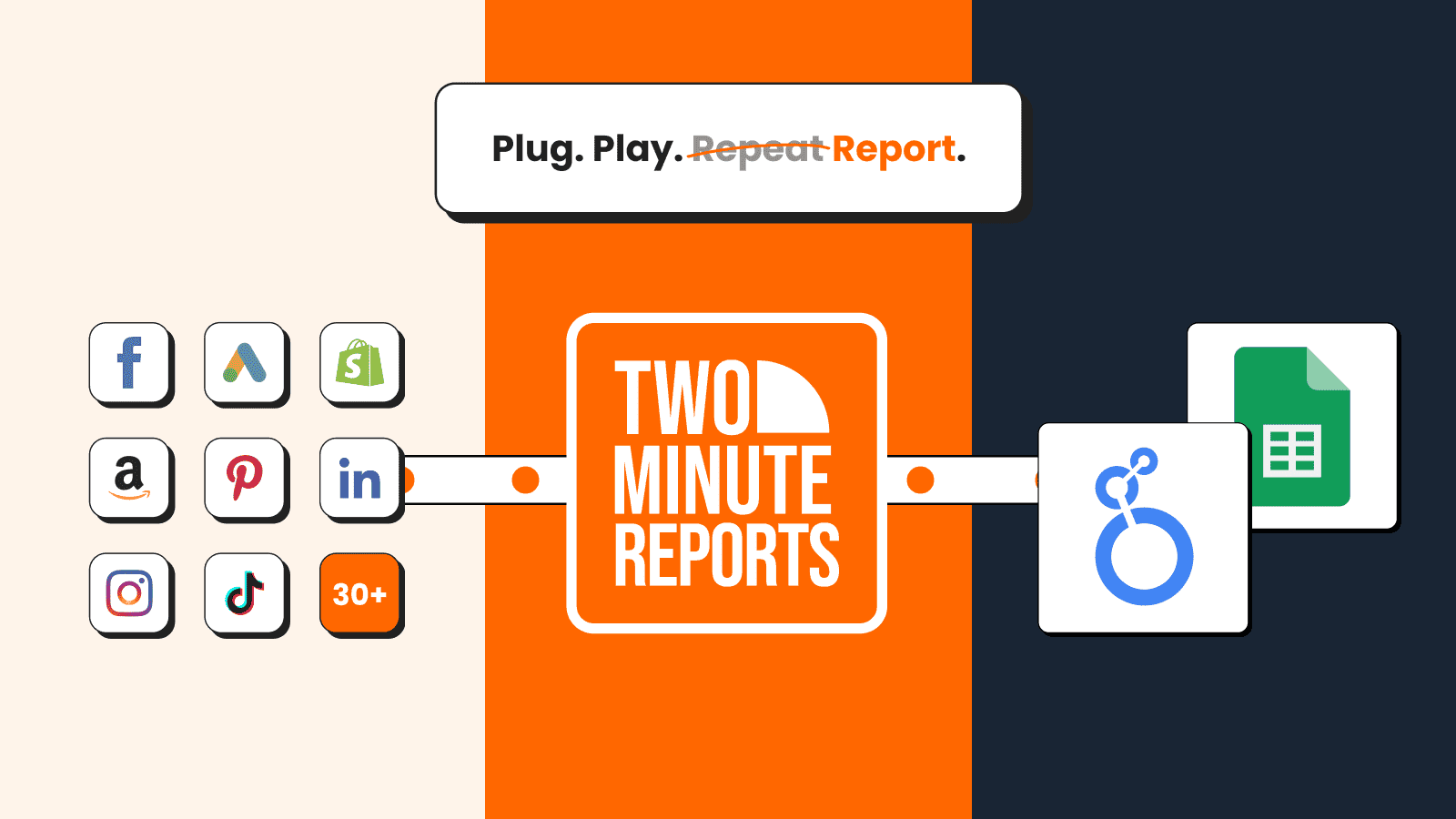
Two Minute Reports is designed to live where you already work, integrating natively with Google Sheets and Looker Studio. It functions as a high-performance bridge, pulling official API data from Shopify, WooCommerce, Amazon, and all major ad channels into a centralized spreadsheet or dashboard.
This tool is particularly effective for teams that find Shopify’s native reports too restrictive or ad platform data too disconnected. Instead of manually exporting CSVs and copy-pasting data to see your true margins, you can set up a "Speedboost" sync that refreshes your data as often as every hour. This ensures that when you look at your sheets, you’re seeing the most current version of your business.
Core Strengths:
- Unified ecommerce integrations: Connect data from Shopify, WooCommerce, Amazon, and dozens of marketing platforms without coding.
- Fast, automated reporting: Say goodbye to manual exports and spreadsheet updates. Two Minute Reports refreshes your dashboards on a schedule, so your metrics stay current without extra work.
- Effortless multi-platform connections: Bring together data from 30+ channels, including Meta Ads, Google Ads, TikTok, Klaviyo, and GA4. Everything syncs directly into Google Sheets or Looker Studio with a few clicks.
- Flexible dashboards tailored to your goals: Create reports that match your business structure, whether you’re tracking revenue, ROAS, LTV, product performance, or cohort trends. Layouts and visuals can be easily adapted to your workflow.
- Automated delivery and sharing: Schedule recurring email deliveries or share live dashboards with your team. Stakeholders get the most up-to-date numbers without needing to request them.
- White-label customization: Add your brand’s logo, color palette, and formatting to your dashboards and downloadable reports. Ideal for agencies and teams that want a consistent presentation across clients.
- Template library for quick setup: Access a collection of ready-to-use templates for ecommerce reporting. These cover essentials like revenue breakdowns, ROAS trends, campaign performance, LTV, cohorts, and more.
- Secure and reliable data handling: Built with strong encryption and role-based permissions to help teams protect sensitive ecommerce data while maintaining controlled access.
- Instant performance notifications: Set thresholds for key metrics and receive alerts when something unusual happens, helping you react to trends or issues faster.
- Smooth client and account management: Easily switch between multiple stores or client accounts. Organize reporting projects in one place and reduce repetitive build-outs.
- Completely no-code workflow: Everything is designed for non-technical users. No scripts, SQL, or API handling required, just connect, configure, and start tracking.
Pros
- Saves hours by automating recurring ecommerce and marketing reports.
- No-code setup works well for non-technical teams.
- Supports 30+ data sources for unified performance tracking across ads, email, and store data.
- Cost-effective for agencies managing multiple clients.
Cons
- Doesn’t include product research or keyword discovery features (it focuses purely on reporting and analytics).
- Deep customization in Looker Studio can take some getting used to if you're new to the tool.
Pricing
- Lite - $97 / month
- Pro - $297 / month
- Business - $597 / month
- 14-Day Free Trial - Available (no credit card required)
Daasity

Daasity is an enterprise-grade ecommerce analytics and data platform designed for DTC brands that need a unified view of sales, marketing, and customer data. It helps teams turn raw data from multiple stores and channels into actionable insights, supporting growth and informed decision-making.
Core Features
- ETL and data warehousing for multi-channel ecommerce data
- Cohort analysis and customer behavior tracking
- Lifetime Value (LTV) modeling for marketing optimization
- Multi-channel revenue and ad spend attribution
- Customizable dashboards and KPI reporting
Pros
- Ideal for scaling brands with complex ecommerce operations
- Advanced customer and cohort insights for better decision-making
- Consolidates multiple data sources in one platform
Cons
- Primarily geared toward enterprise/DTC brands; may be overkill for smaller stores
- Setup and integration can require technical knowledge
- Premium pricing may not suit smaller businesses
Pricing
Enterprise pricing typically requires a custom quote based on store size and integrations.
Kissmetrics


Kissmetrics is a customer-focused analytics platform that helps ecommerce brands understand user behavior, optimize funnels, and increase retention. It tracks the full customer journey, giving insights into who your customers are, how they interact with your brand, and what drives repeat purchases.
Core Features
- Customer journey and behavior tracking
- Funnel and conversion analysis
- Cohort analysis for retention and LTV insights
- Revenue and engagement reporting
- Integration with ecommerce and marketing platforms
Pros
- Deep insights into customer behavior and lifecycle
- Helps optimize funnels and marketing ROI
- Useful for tracking repeat purchase patterns and retention metrics
Cons
- Focused primarily on analytics; not a full reporting/dashboard solution
- Setup can be complex for non-technical users
- Pricing can be high for small or new ecommerce stores
Pricing
- Small sized teams: $25.99/month
- Medium sized teams: $299/month
- Custom pricing based on the number of users and events tracked.
DashThis

DashThis is a marketing-focused reporting platform that lets ecommerce teams create visual dashboards without manual data compilation. It pulls data from multiple marketing, advertising, and analytics platforms, making it easy to track campaign performance at a glance.
Core Features
- Multi-channel marketing data integration (Meta, Google Ads, TikTok, email, etc.)
- Pre-built and customizable dashboard templates
- Automated report scheduling and delivery
- KPI tracking with visual charts and graphs
- White-label reports for agencies and client presentations
Pros
- Quick setup with pre-built dashboards
- Saves time by automating recurring reporting tasks
- White-label capabilities make it agency-friendly
Cons
- Primarily focused on marketing performance, not full ecommerce analytics
- Advanced customization may require some learning
- Less suited for deep product-level or customer cohort analysis
Pricing
- Individual: $42/month
- Professional: $135/month
- Business: $264/month
- Standard: $409/month
Polar Analytics

Polar Analytics is an all-in-one ecommerce analytics platform built specifically for DTC brands. It centralizes data from Shopify, Amazon, marketing channels, and subscription tools into a unified dashboard. Polar focuses heavily on customer journeys, LTV insights, and cohort behavior, making it a strong fit for retention-driven brands.
Core Features
- Unified ecommerce dashboard combining sales, marketing, and subscription data
- Advanced LTV, CAC, and cohort analysis built for DTC workflows
- Marketing attribution modeling across paid and organic channels
- AI-powered forecasting and anomaly detection
- Automated email reporting and team alerts
Pros
- Excellent LTV and cohort analytics out of the box
- Strong integrations with DTC tools like Recharge, Klaviyo, and Google Ads
- User-friendly interface with minimal setup
Cons
- More expensive than beginner-friendly reporting tools
- Limited flexibility for custom data modeling
- Best suited for brands already producing consistent revenue (mid-market +)
Pricing
Price depends on store size and integrations, with advanced plans for scaling brands.
Glew.io

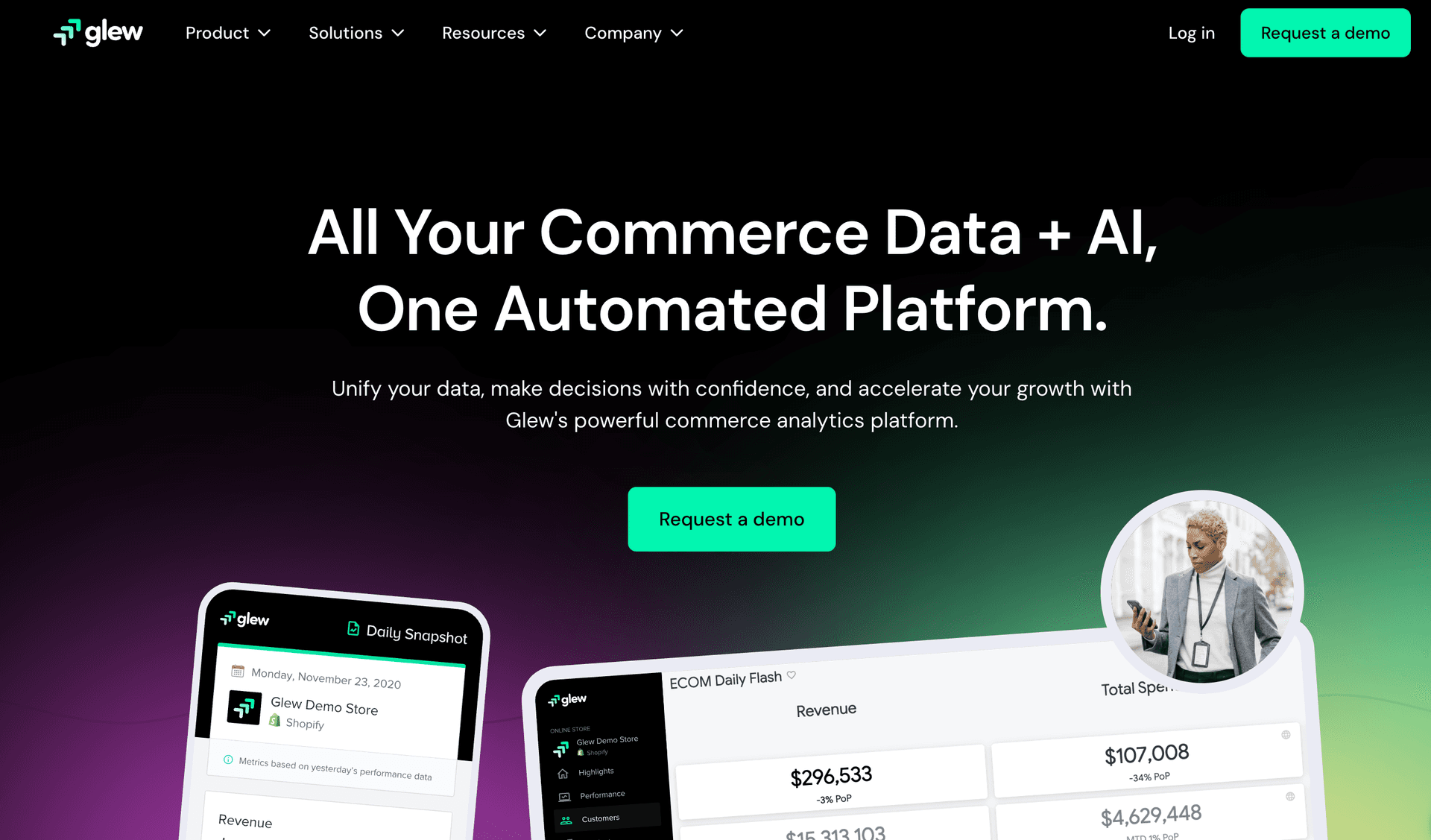
Glew.io is a comprehensive ecommerce analytics and business intelligence tool designed for online stores that need deeper insights into product performance, customer segmentation, and profitability. It aggregates data from ecommerce platforms, marketing channels, and fulfillment tools, giving brands a complete view of their operations.
Core Features
- Product and SKU-level performance analytics
- Customer segmentation, LTV tracking, and repeat-purchase insights
- Marketing channel attribution and ROAS reporting
- Inventory, profitability, and margin analysis
- Automated daily, weekly, or monthly email summaries
Pros
- Strong product-level reporting, ideal for merchandising decisions
- Detailed profitability and margin analysis
- Useful for identifying high-value segments and repeat buyers
Cons
- The interface can feel cluttered for new users
- Setup may require more time compared to lightweight tools
- Pricing increases significantly for advanced data features
Pricing
Custom plans for every tier and advanced analytics.
Triple Whale

Triple Whale is a popular ecommerce analytics and attribution platform built for Shopify brands. It unifies your sales, marketing, and customer data into a single dashboard, with a strong emphasis on multi-channel attribution and real-time performance tracking. It’s especially known for its “Triple Pixel,” which helps brands track customer touchpoints across paid ads, email, and onsite behavior.
Core Features
- Multi-channel attribution with the Triple Pixel
- Real-time dashboards for revenue, ROAS, and channel performance
- LTV and cohort analytics for retention-focused brands
- Creative analytics to identify top-performing ad assets
- Automated reporting via mobile app and email
Pros
- Excellent attribution insights specifically for Shopify
- Strong creative analytics for improving ad performance
- Real-time mobile app makes monitoring easy
Cons
- Only available for Shopify stores
- Attribution accuracy may vary depending on the tracking setup
- Higher pricing compared to beginner tools
Pricing
- Free: $0/month
- Starter: $149/month
- Advanced: $219/month
Maestra


Maestra is an all-in-one marketing personalization platform for DTC brands. Its real-time CDP unifies data from all channels into actionable segments with AI-powered behavioral insights. Granular segments power omnichannel messaging, on-site personalization, product recommendations, loyalty programs, and paid ads. Maestra offers full-funnel reporting with configurable attribution and email health monitoring. Marketers can promote the platform's AI assistant to track business goals and analyze marketing data — then recommend flows, segments, A/B tests, and optimizations.
Core Features
- Comprehensive AI-powered analytics, including loyalty, campaign, and email health dashboards
- A/B testing with incremental revenue impact
- Real-time CDP that unifies customer data from every touchpoint
- Advanced segmentation (RFM analysis, nested logic, custom and computed fields)
- Omnichannel marketing (email, SMS, loyalty, personalization, recommendations)
- Dedicated CSM who builds segments, optimizes campaigns, and suggests strategy — available via a shared Slack channel and weekly calls
Pros
- Detailed reporting lets teams analyze performance by segment, channel, flow, or campaign — tracking both behavioral metrics and revenue
- Dedicated CSM acts as a strategic partner and handles optimization at no extra cost, freeing up your team's time
- AI Assistant suggests what to test, launch, and optimize, reducing guesswork
- Segments update in real time and sync to paid media instantly, so customers who convert stop seeing the ads and budget isn't wasted
- The platform replaces multiple tools, simplifying operations and reducing total costs
Cons
- Analytics are marketing-focused only
- Not a standalone reporting tool — built for brands consolidating their full marketing stack
Pricing
Plans start at $2,990/month for up to 150K active profiles — full feature access and a dedicated CSM for each account.
Final Thoughts
Ecommerce in 2026 isn’t just about collecting data; it’s about unifying it. With so many sales channels, ad platforms, and customer touchpoints, brands need reporting tools that bring everything together in one place and make insights easy to action.
Ultimately, the right tool depends on your store’s complexity, your marketing stack, and the way your team works. A fast-growing DTC brand will need different capabilities than an agency managing multiple clients, or a store with thousands of SKUs to oversee.
Whichever platform you choose, the goal remains the same: reduce manual work, eliminate guesswork, and speed up your decision-making. When your data is accurate, automated, and accessible, you can focus your time where it matters most, scaling the business.
Frequently Asked Questions
An ecommerce reporting tool helps you pull data from platforms like Shopify, WooCommerce, Amazon, and marketing channels into one place. It visualizes key metrics such as revenue, ROAS, CAC, LTV, and cohort behavior so you can track performance and make faster decisions.
For multi-channel brands selling across Shopify/WooCommerce + running ads on Meta, Google, TikTok, and email via Klaviyo, tools like Two Minute Reports offer the widest integrations and most flexible dashboards.
Yes. By giving you visibility into revenue trends, marketing performance, product profitability, and customer behavior, these tools help you identify what’s working and what needs optimization. The insights allow you to reallocate budget, fix bottlenecks, and scale profitable channels.
Look for real-time syncing, multi-channel integrations, automated dashboards, scheduled email reports, LTV/cohort analysis, attribution insights, and scalability for multiple stores. AI forecasting and anomaly alerts are also valuable for fast-moving teams.
It depends on the platform. Tools like Two Minute Reports, DashThis, and Polar Analytics are more user-friendly with no-code setup. Platforms like Daasity or Glew.io offer deeper analytics but may require more configuration or technical knowledge.
Related Blogs




Meet the Author
Shabika VenkidachalamShabika, at her core, is a storyteller who believes even data-heavy topics can be infused with heart. At Two Minute Reports, she blends creative writing with user intent to create clear, purposeful content that is deeply human. Away from her desk, she finds inspiration in nature, where creativity flourishes without distractions.

