
Summarize this blog post with:
Your campaign report shows high ad spend but low conversions. On paper, nothing looks broken – CTR is steady, and impressions are up. Yet the numbers that actually matter to your business aren’t moving.
This disconnect usually isn’t caused by poor execution. It happens when PPC campaigns are optimized around surface-level metrics that track activity rather than real business impact. As bidding becomes more automated and competition intensifies, these signals make it harder to understand what’s truly driving results.
This article helps you close that gap. You’ll discover the crucial 11 PPC metrics to track for success, the tools to automate real-time PPC performance insights and an optimization checklist to scale your results with confidence.
Let’s get started.
Why Traditional PPC Metrics No Longer Tell the Full Story?
Your clients aren’t paying for a 50-page, lengthy metrics spreadsheet; they pay for real business outcomes. If your monthly reports still lead with high CTRs and low CPCs, while your client’s lead pipeline remains stagnant, you aren’t failing to show value – you are increasing the risk of churn.
The problem with tracking vanity metrics is that they create a false positive narrative. Simply tracking and presenting numbers doesn’t help retain clients if they aren’t tied to how the business defines success. To position your agency as a strategic partner, you must adopt an action-oriented framework.
In order to make this happen, you need a modern approach that categorizes PPC metrics into three strategic pillars. They are:
- Profitability & Growth Metrics – ROAS, CPA, POAS, LTV.
- Efficiency & Cost Control Metrics – Conversion rate, CPC, and CPL.
- Visibility & Brand Health Metrics – Impression Share, CTR, Quality Score, and Invalid Click Rate.
The Modern Action-Driven View of PPC Metrics
This shift from simply tracking to interpreting PPC metrics by intent is what separates reporting that looks good from reporting that actually improves performance.
The 11 Important PPC Metrics You Should Track
Here’s a list of the most important PPC advertising metrics to track, along with optimization tips to help you streamline performance and improve ROI.
Profitability and Growth Metrics
1. ROAS
ROAS tells you whether scaling ad spend makes financial sense. It helps you distinguish campaigns that generate revenue from those that only drive volume, making it essential for controlled growth, especially in ecommerce.
How to optimize?
- Scale budgets only on campaigns that have consistently proven to generate profits.
- Reduce spend on low-ROAS segments before testing new creatives or offers.
- Improve revenue per conversion through upsells, bundles, or pricing tests instead of chasing low-quality traffic.
2. Cost Per Acquisition (CPA)
CPA keeps the acquisition costs aligned with your business. Without a clear CPA threshold, campaigns can generate conversions that look successful but are unprofitable.
If your product generates $100 in revenue per customer but your CPA is $120, the campaign will show conversions but lose money on every sale. Setting a CPA cap aligned with gross margin or lifetime value helps ensure each conversion supports sustainable growth.
In short, CPA is justified when it is anchored to revenue, margins and LTV and not just conversion count.
How to optimize?
- Separate high-intent and low-intent traffic to avoid inflated averages.
- Fix conversion bottlenecks (forms, page speed, messaging) before lowering bids.
- Use automated CPA bidding only after conversion data is stable.
3. POAS (Profit On Ad Spend)
POAS reveals the true performance by factoring in margins, not just revenue. It prevents over-investment in campaigns that look efficient but erode profit.
How to optimize?
- Spend more on products where each sale leaves more profit.
- Scale ads for products that actually make more money.
- Set different performance expectations for high-margin vs low-margin products instead of treating all revenue equally.
Note: ROAS vs POAS: What’s the difference?
4. Customer Lifetime Value (LTV)
LTV shifts focus from short-term wins to long-term growth. It allows you to invest more aggressively in channels that bring repeat or higher-value customers.
How to optimize?
- Streamline acquisition costs for campaigns that drive repeat purchases.
- Segment new vs returning customers to measure long-term impact.
- Optimize campaigns based on revenue generated, not just the number of conversions.
Efficiency and Cost Control Metrics
5. Conversion Rate
CVR highlights how effectively clicks turn into outcomes. Low CVR often signals friction after the click, not poor traffic quality.
How to optimize?
- Align your ad copy closely with the landing page intent.
- Improve mobile usability and page load speed.
- Simplify forms and checkout flows to reduce drop-offs.
6. Cost Per Click (CPC)
CPC reflects both competition and relevance. Rising CPCs can quickly diminish margins if not controlled through quality and targeting improvements.
How to optimize?
- Improve relevance and Quality Score instead of cutting bids blindly.
- Optimize for high-intent keywords and audience segmentation.
- Regularly exclude low-intent queries and placements.
7. Cost Per Lead (CPL)
CPL only has meaning when paired with lead quality. Low CPL is misleading if leads don’t convert into revenue.
How to optimize?
- Improve lead qualification through form fields or offer alignment.
- Analyze CPL by source or campaign type, not blended averages.
- Optimize towards crucial metrics such as lead-to-close rate.
Visibility and Brand Health Metrics
8. Impression Share
Impression Share reveals how often your ads appear when they could, helping you assess missed opportunities due to budget and competitiveness.
How to optimize?
- Increase the budget on profitable campaigns losing share due to spending limits.
- Improve relevance if the ad rank is restricting visibility.
- Accept a lower share on low-value keywords to protect efficiency.
9. Click-through Rate
CTR signals relevance, not success. It helps diagnose ad-message alignment but doesn’t guarantee conversions or profitability.
How to optimize?
- Write intent-driven ad copy instead of generic messaging.
- Segment ads by keywords or audience for better alignment.
- Deprioritize CTR gains that don’t improve CVR or ROI.
10. Quality Score
This is an important Google Ad metric, directly affecting CPC and impression eligibility. If your score is low, it increases costs and limits scale.
How to optimize?
- Group keywords more tightly by intent.
- Match ad copy closely with landing page content.
- Pause or restructure keywords with persistently low scores.
11. Invalid Click Rate
Invalid clicks inflate costs without adding value. Left unchecked, they distort performance data and affect your budget.
How to optimize?
- Monitor for unusual spikes and act quickly.
- Exclude suspicious placements, locations or IP ranges.
- Set alerts to catch anomalies early.
Key Takeaway:
The goal isn’t to optimize every PPC metric at once. Strong PPC performance comes from focusing on the metrics that align with your business goals and using them to drive clear, confident decisions.
How to Align PPC Metrics With Your Business Goals?
The biggest mistake many teams make is tracking everything, regardless of what your business is trying to achieve. When metrics aren’t aligned with your goals, optimization becomes reactive, and reporting loses credibility.
Aligning your metrics is about identifying the North Star – the one number that, if improved, guarantees a successful quarter for your client.
Goal-Metric Alignment Matrix
Use this table to ensure you are tracking indicators that matter to your business type.
Pro Tip For Agencies:
When onboarding a new client, ask: “If we could grow one number this month to consider this a win, what would it be?” Once you have that answer, use your Two Minute Reports dashboard to track the performance of that metric in real-time. So that every time your client opens their dashboard, they can visualize the progress with clarity.
How to track and analyze PPC metrics using Two Minute Reports?
Here’s a simple 3-step process to track, analyze and optimize your PPC metrics in real time using Two Minute Reports:
1. Connect your PPC platforms: Integrate Meta, Google Ads, LinkedIn Ads, Snapchat Ads, and other PPC platforms with Two Minute Reports. Once done, you can select your ad accounts to measure campaign performance insights.
2. Build custom PPC reports: Specify key metrics such as CVR, ROAS, CPC, etc and build custom PPC client reports that reflect the effectiveness of your campaign strategy. Organize them by campaign, ad groups, and ads across multiple clients to visualize granular performance insights in one place.
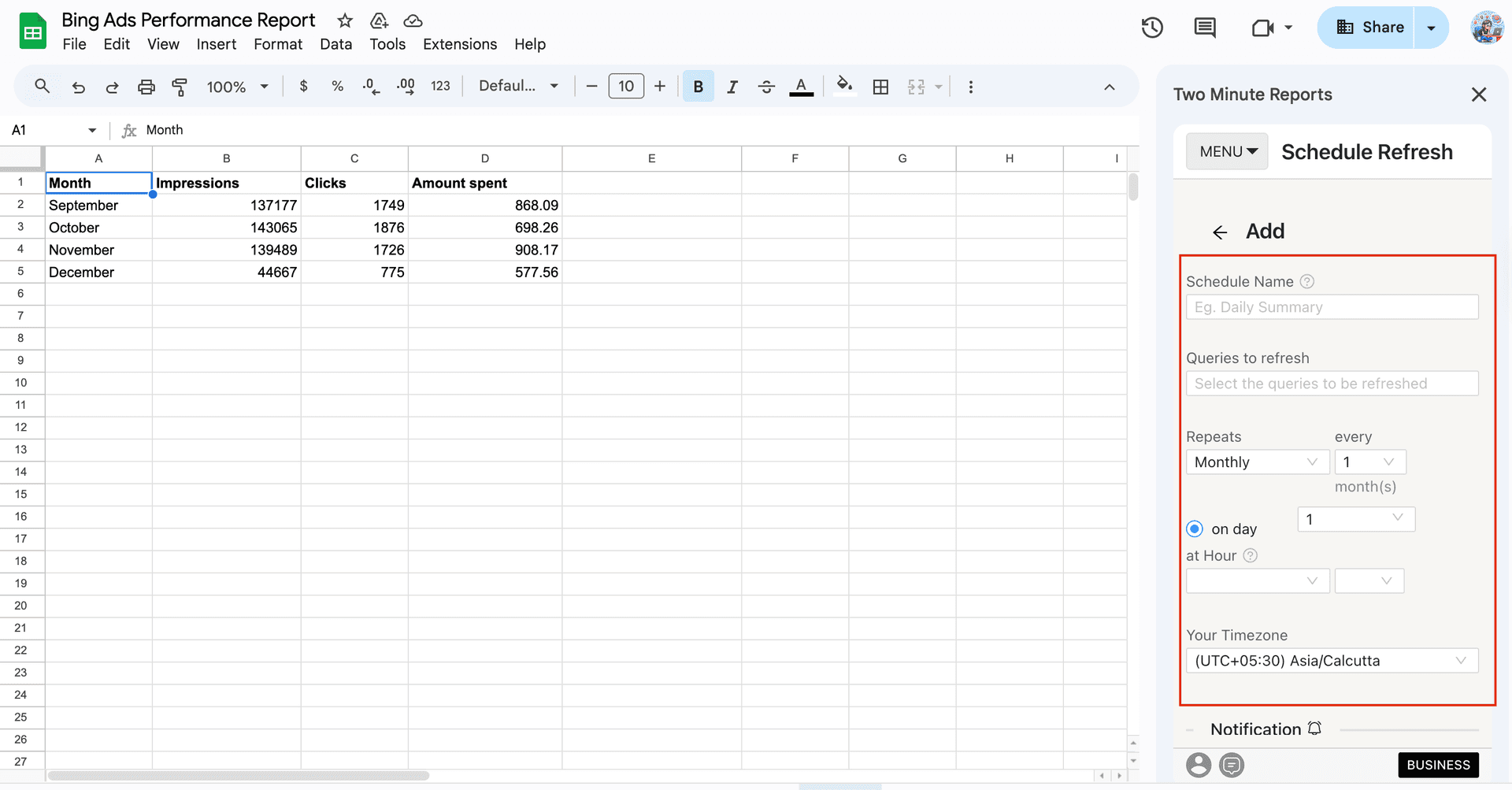
3. Automate report delivery: Set up custom refresh schedules (hourly, daily, weekly or monthly) to automatically track up-to-minute PPC metrics in real-time. Understand what’s working, spot improvement areas, and act proactively to maximize campaign performance.

Bonus: Check out our free PPC reporting templates to streamline and automate campaign performance tracking:
- Facebook Ads Campaign Performance Dashboard
- Google Ads Visibility Overview Report
- LinkedIn Ads Account-Based Marketing Report
- Amazon Ads Orders and Sales Analytical Report
- TikTok Ads Overview Report
- Facebook Ads vs Google Ads vs LinkedIn Ads dashboard
Pro tip: Reuse your existing PPC reports/dashboards across multiple clients to save setup time, maintain consistency, and scale reporting without rebuilding from scratch.
The Strategic PPC Metrics Optimization Checklist (2026 Edition)
This actionable checklist is divided into 3 phases, helping you capture every campaign scaling opportunity.
Phase 1: The Daily Pulse Check
Goal: Stop wasted spend and catch issues early.
- Check invalid clicks: If invalid traffic suddenly increases, block it or update exclusions.
- Identify zero-conversion spend: If a campaign spends above its expected CPA/CPL range with no conversions, consider pausing or reducing the spend.
- Review budget limits: If a profitable campaign is losing impressions due to budget, flag it for scaling.
Phase 2: The Weekly Efficiency Audit
Goal: Spend more on what works and less on what doesn’t.
- Pause poor performers: Stop or reduce spend on products, keywords, or audiences that are not profitable.
- Scale what’s working: Increase the budget or bids on campaigns that are driving most of the results.
- Check clicks vs conversion mismatch: High clicks but low conversions usually mean friction in your landing page.
- Improve Low Quality Scores: Identify issues with ads that have low Quality Scores and make improvements in ad copy, landing page relevance, and targeting.
Phase 3: The Monthly Growth Review Strategy
Goal: Show results and plan the next step
- Review total ROI: Compare total ad spend with total revenue from all channels.
- Compare LTV to CAC: Ensure customer lifetime value is higher than the cost to acquire them.
- Track competition: Check if you are gaining or losing visibility against competitors.
- Plan next moves: Identify one area to stop scaling and one new area to test for new opportunities.
Conclusion
Modern PPC performance isn’t defined by how much data you track, but by how clearly that data drives decisions. When reporting focuses on outcomes instead of activity, optimization becomes proactive, and client conversations shift from justification to growth.
To make this happen, ensure you tick off the boxes before you send your next PPC campaign report to your client:
- Are you tracking cross-channel ROI or reporting in isolated platforms?
- Are you prioritizing outcome-driven metrics such as POAS and LTV?
- Can your client access their core PPC performance metrics at any time through a live dashboard?
- Are spending anomalies and performance drops flagged early before they become costly mistakes?
If these questions are difficult to answer, it means your data is spread across platforms. With a reliable PPC reporting tool such as Two Minute Reports, you can unify cross-channel data, automate PPC performance tracking, and give clients instant access to the metrics that always matter.
Try Two Minute Reports free for 14 days and experience the difference for yourself.
Frequently Asked Questions
The 11 important PPC metrics to track include ROAS, CPA, POAS, LTV, conversion rate, CPC, CPL, impression share, CTR, quality score, and invalid click rate. Each of these metrics provides insights into different aspects of your campaign performance.
To align PPC metrics with your business goals, identify your North Star metric – the one number that, if improved, guarantees success for your client. This focus helps ensure that your optimization efforts are relevant and impactful.
Two Minute Reports is an automated reporting tool that enables you to connect various PPC platforms and create custom marketing dashboards to track and analyze campaign performance in real-time. It helps automate report delivery and visualize actionable PPC insights across multiple clients holistically.
You should review PPC metrics at different frequencies based on their purpose. Budget-related metrics should be checked daily to identify anomalies, while efficiency metrics (CVR, CPC, CPL) should be reviewed weekly to guide optimization and profitability, and growth metrics (ROAS, POAS, LTV) should be evaluated monthly to assess their overall impact.
You can automate your PPC reporting by setting up custom refresh schedules (hourly, daily, weekly & monthly), allowing you to track metrics in real-time and deliver up-to-minute campaign performance insights without manual updates.
Related Blogs




Meet the Author
Shalini MuruganShalini is driven by ideas that create a tangible impact. At Two Minute Reports, she specializes in content that helps marketers optimize their reporting workflows. When she's not transforming complex data into meaningful insights, you might find her lost in a book, jotting down ideas in her notebook, or connecting the dots others overlook.

