
Summarize this blog post with:
You manage multiple marketing campaigns for different clients. Then, your client asks for the weekly update, and you’re left struggling with the dashboards, unsure of what to deliver. The numbers look fine, but when it’s time to interpret them, you’re lost.
The reason? Not having a clear understanding of which digital marketing KPIs to track.
When you have clarity on what to track, you can steer your campaigns effectively and justify your client’s budget. To do this, you must focus on the right digital marketing KPIs that shift your focus from “here’s what we’ve done” to “here’s what this means for your business”.
Most importantly, with an automated marketing reporting software, tracking KPIs becomes much easier. With Two Minute Reports, you can connect your marketing platforms, extract relevant KPIs, and visualize insights to optimize ROI.
In this blog, I’ll walk you through the 30+ digital marketing KPIs that help you deliver tangible results to your clients.
Let’s get started.
How to choose the right digital marketing KPIs?
Choosing the right digital marketing KPIs for your campaigns isn’t just about picking a random set of metrics. It’s about answering the ideal questions that align with your specific goals, ensuring that your KPIs are meaningful and actionable.
Here’s how you can go about selecting the KPIs that will drive your marketing success:
1. What’s your campaign goal?
Are you trying to increase brand awareness, generate leads or drive sales? The goal shapes the metrics you track. For awareness, focus on reach and traffic. For leads, track conversion rates and cost per lead (CPL). For sales, focus on ROAS and CPA.
2. Who needs to visualize the data?
Different teams need different KPIs. Marketing teams care about engagement and conversions. Sales teams track revenue and ROI. Customer success teams focus on CLV and churn rate. Ensure you’re tracking what’s most relevant to your clients or stakeholders.
3. What data do you have access to?
You can’t track what you don’t have data for. Make sure your digital marketing KPIs align with the data available in your tools, whether it’s Google Analytics, social media platforms, or CRM software.
4. How often should you track these KPIs?
- Daily: For fast-moving campaigns like PPC and social media.
- Weekly: For ongoing campaigns or mid-term adjustments, such as conversion rates or lead volume.
- Monthly: For more stable, long-term performance metrics such as sales performance or customer retention.
- Quarterly: For crucial, big-picture metrics such as CLV or overall brand performance.
5. Can these KPIs scale?
As your campaigns evolve, the KPIs should grow with you. Choose metrics that will remain relevant as your strategy changes or expands with time.
By answering these key questions, you can identify the right digital marketing KPIs that not only align with your campaign’s objectives but also give you clear, data-driven insights that guide your strategy. Regularly reviewing your performance will help you stay agile, optimize campaigns, and improve overall return on investment.
What are the different categories of digital marketing KPIs?
Every digital marketing channel has its own set of key metrics. By categorizing KPIs, you can track the performance of specific activities and optimize your strategy effectively. Here are the core categories:
- Search Engine Optimization KPIs
- Social Media Marketing KPIs
- PPC Campaign KPIs
- Content Marketing KPIs
- Customer Retention KPIs
By understanding these categories and tracking the relevant marketing metrics, you can streamline your efforts across each channel and make evidence-based decisions that improve overall performance.
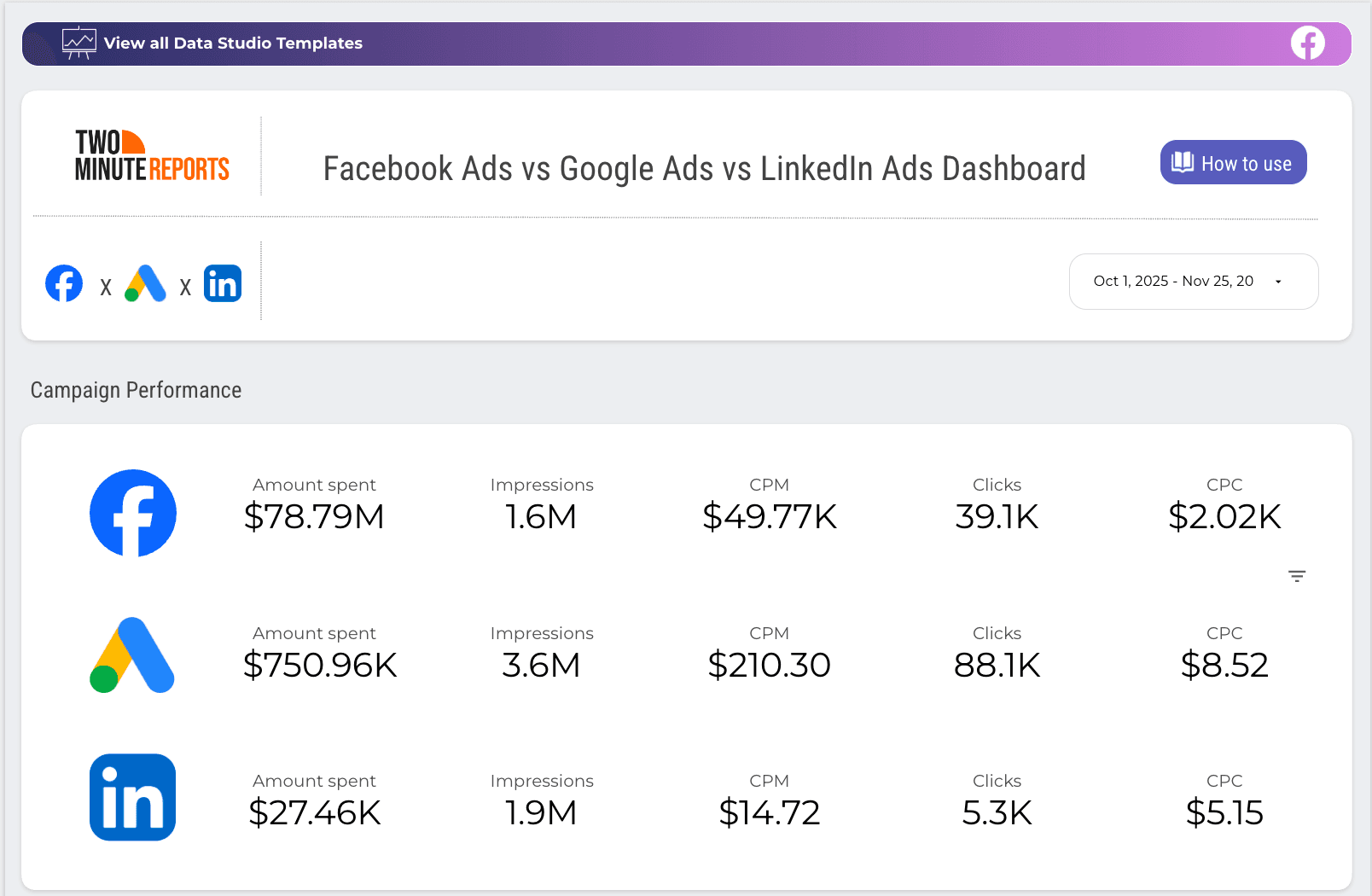
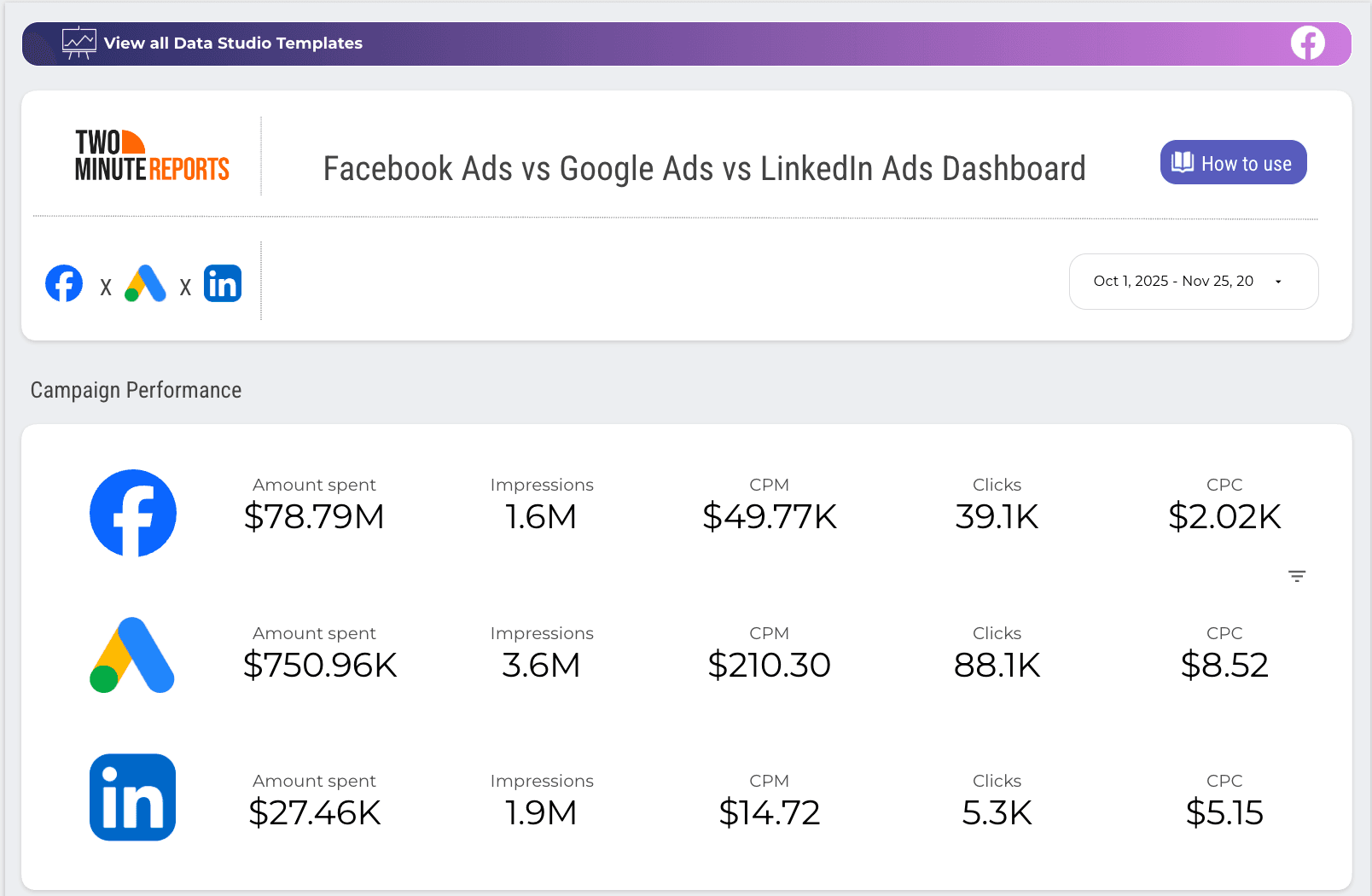
Track Facebook Ads, Google Ads, and LinkedIn Ads metrics in a single dashboard. Identify what’s working, optimize ad spend, and unlock true cross-channel ROI. No need to switch platforms manually.
30+ Digital Marketing KPIs to measure performance
Now, let’s dive into the key digital marketing KPIs in each category that will help you build a strong, data-driven marketing strategy.
5 Important SEO KPIs
1. Organic Traffic
What it is: The number of visitors who land on your website through unpaid search results.
Why it matters: Organic traffic indicates the effectiveness of your SEO strategy in driving relevant visitors.
2. Keyword rankings
What it is: Refers to your website’s position in Google for specific search queries.
Why it matters: It informs how well you bring targeted traffic to your website. Higher rankings contribute to increased website visibility.
3. Click-through rate
What it is: The percentage of users who click your website link in the Google search results.
Why it matters: CTR plays a crucial role in driving high-quality traffic. Ensure your content is aligned with the user intent to attract more website clicks.
4. Backlinks
What it is: Links from other websites pointing to yours.
Why it matters: The more high-quality links you receive, the higher your domain rating will be compared to your competitors.
5. Bounce rate
What it is: The percentage of visitors who visit and leave your site without having any interaction.
Why it matters: A high bounce rate may signal poor user experience, meaning users aren’t engaging with your content or finding what they need.
Pro tip: Looking to extract metrics from SEO platforms? Check out our free templates.
- Google Search Console Overview Report
- Page Speed Insights – Performance and Time Report
- Google My Business Overview Report
- Google Trends – Daily Search Trends
While streamlining SEO metrics is important, presenting them effectively to clients is also crucial. That’s where white-label SEO reporting comes in. With this, you can automate the reporting process, saving you time and ensuring you can present the data in a way that demonstrates your agency's expertise.
10 Important Social Media Marketing KPIs
1. Engagement rate
What it is: The percentage of users who interact with your content relative to your total number of followers.
Why it matters: Engagement rate measures how compelling your content is. Higher engagement indicates your audience is interested in your brand, driving more visibility and fostering stronger relationships.
2. Follower Growth
What it is: The rate at which your social media audience is growing over time.
Why it matters: The higher the follower rate, the more you attract potential new customers. This helps measure your social media strategy's effectiveness in expanding your reach.
3. Impressions
What it is: The total number of times your content is displayed on the user’s feed, regardless of whether it is clicked or not.
Why it matters: If your content reaches a wider audience, it is a good indicator that your strategy is working. This helps in expanding your brand reach, helping you gain visibility and foster stronger relationships with your target market.
4. Click-through rate
What it is: The percentage of visitors who land on your website after clicking a link on your social media post.
Why it matters: CTR plays a crucial role in shaping your customer journey. A high CTR rate helps in bringing potential visitors who are more likely to turn into paying customers.
5. Conversion rate
What it is: The percentage of your target audience on social media who complete a desired action.
Why it matters: A higher conversion rate indicates that your social media efforts translate into tangible results, helping you maximize your bottom line.
6. Brand mentions
What it is: The total number of times your brand gets mentioned across social media platforms.
Why it matters: Tracking mentions helps you gauge brand awareness, customer sentiment, giving you an overall perception of how your brand is being perceived.
7. Video completion rate
What it is: The percentage of users who watch the video from start to end.
Why it matters: The higher the completion rate, the better your engagement will be. Lower completion rates signal refining content strategy to capture your audience’s attention.
8. Social share of voice (SOV)
What it is: The percentage of conversations about your brand compared to your competitors within your niche.
Why it matters: A higher share of voice indicates strong authority, while a lower share could signal missed opportunities to improve visibility.
9. Video views
What it is: The total number of times your video has been viewed.
Why it matters: Higher video views indicate that your content is attention-grabbing. You can leverage this opportunity to expand your reach and build stronger relationships with targeted content.
10. Cost Per Click
What it is: The cost incurred for each click on your social media ad.
Why it matters: CPC is an important social media metric that helps evaluate the effectiveness of your ad campaigns. Lower CPC means you are targeting the right audience, increasing ROI and justifying ad spend.
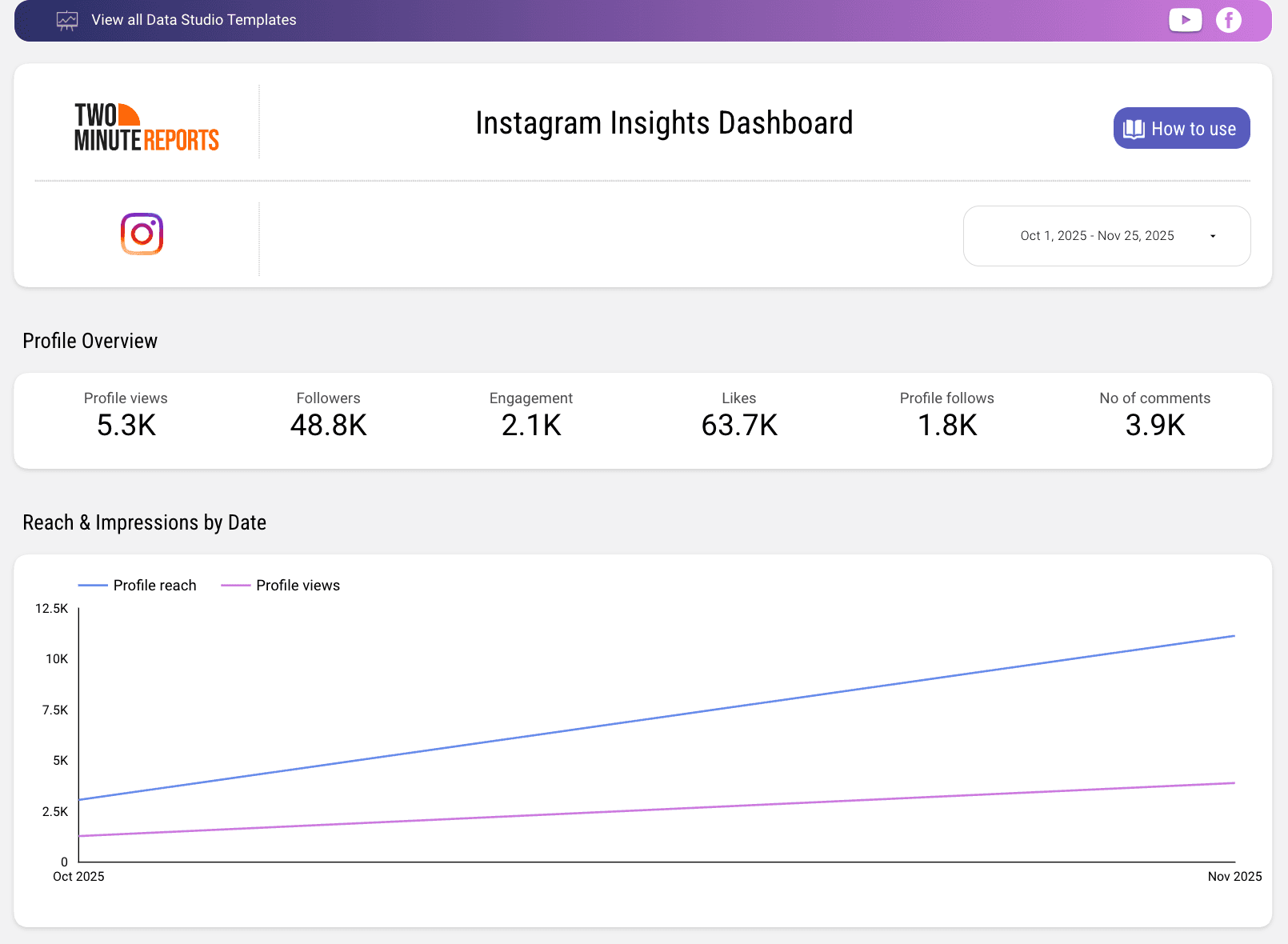
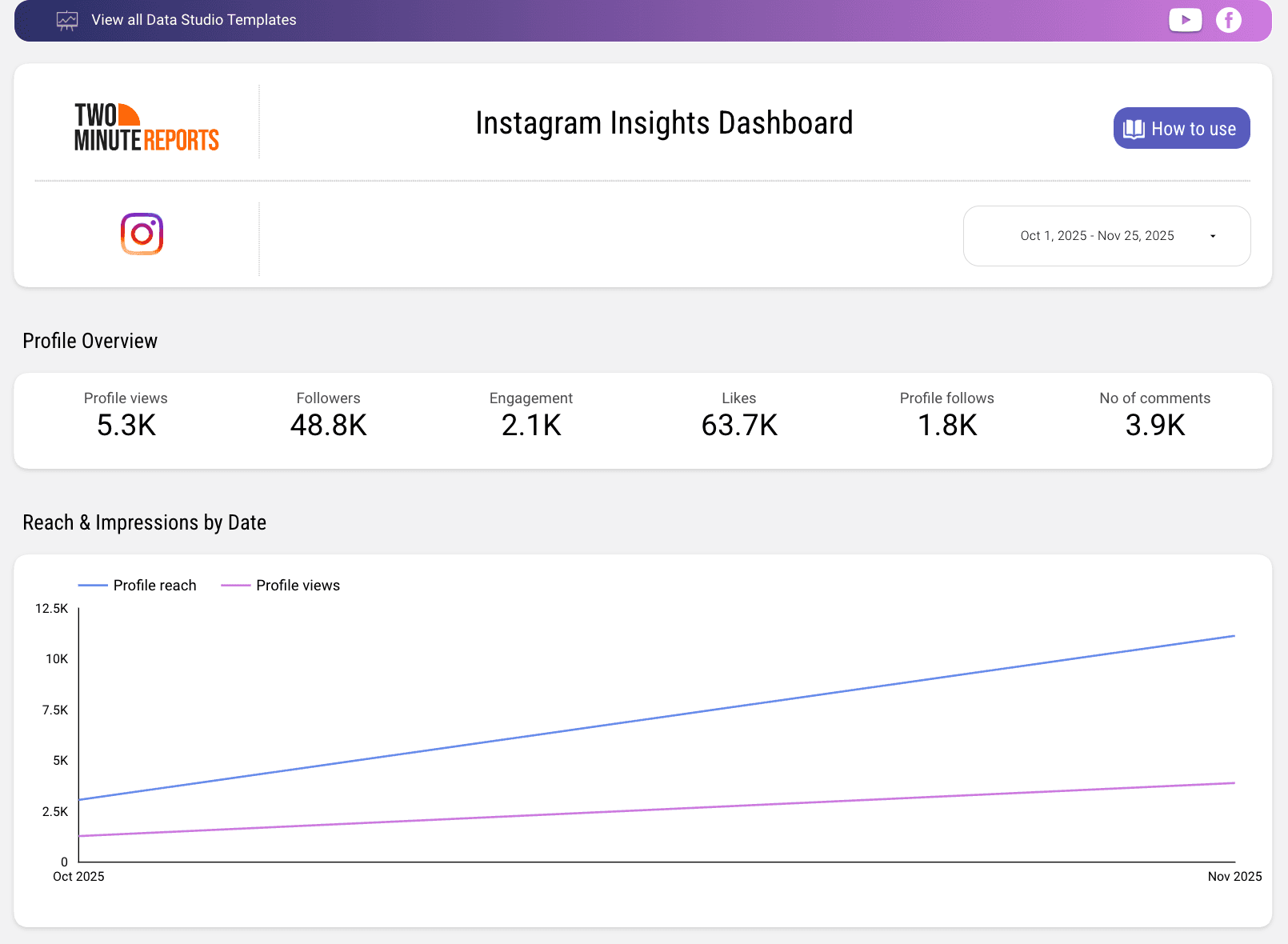
Get a clear picture of your profile performance, engagement, reach, impressions, and views by account in a single Instagram Insights dashboard. Easily track key insights in real-time and optimize with confidence.
10 Important PPC Campaign KPIs
1. Cost Per Conversion
What it is: The cost incurred to achieve a single conversion action.
Why it matters: Helps you measure how effective your ad strategy is in converting clicks into valuable actions.
2. Quality Score
What it is: A Google Ads rating on a scale of 0-10 based on your ad relevance, keywords, and landing page.
Why it matters: A higher Quality Score leads to better ad positions, whereas a lower score requires you to optimize your Google Ads by tweaking landing page copy, targeting, etc.
3. Impression share
What it is: The percentage of impressions your ads received compared to the total number of impressions your ad could get. It is calculated by dividing impressions by total eligible impressions.
Why it matters: It helps assess how competitive your campaign is and whether you’re missing out on potential traffic.
4. Return on ad spend
What it is: The revenue generated for every dollar spent on ads.
Why it matters: The whole point of running a campaign is to generate profits. ROAS evaluates whether your ad investment is worthwhile.
5. Ad position
What it means: Your ad rank in the Google search results.
Why it matters: The higher your ad, the more visibility and clicks it receives, boosting CTR and ROI.
6. Cost Per Thousand Impressions
What it means: The cost of 1000 impressions on your ad.
Why it matters: Helps you to measure the cost of reaching a larger audience. Useful for brand awareness campaigns.
7. Conversion Value
What it means: The monetary value assigned to a conversion action (sale, lead, signup, etc).
Why it matters: It lets you track which attribution is directly contributing to your ad revenue.
8. Customer Acquisition Cost
What it means: The cost of acquiring a new customer.
Why it matters: CAC helps you determine the profitability of your campaigns. Higher CAC might drain your budget, whereas lower CAC indicates your ad efficiency in converting visitors to customers.
9. Average CPC
What it is: The average amount paid for each click.
Why it matters: Lower CPC means you're driving traffic at a cost-effective rate, improving overall campaign efficiency.
10. Conversion rate
What it is: The percentage of visitors who complete an action on your website.
Why it matters: A high conversion rate indicates that your landing pages and offers are compelling, resulting in more successful conversions from clicks.
Pro tip: Looking for channel-specific and blended PPC templates? Check them out below:
- Facebook Ads Lead generation template
- Google Ads vs Facebook Ads template
- Microsoft Ads Overview template
- LinkedIn Ads Account-Based Marketing templates
5 Important Content Marketing KPIs
1. Website traffic
What it is: The number of visitors coming to your website from organic search results.
Why it matters: The higher the website traffic, the better your content resonates with a broader audience. This is essential for brand awareness and lead generation.
2. Time on Page
What it is: The average amount of time visitors spend on a specific page or content.
Why it matters: A higher time on page suggests that users find your content useful and engaging. It’s a strong indicator of content quality and relevance to your audience’s needs.
3. Lead generation
What it is: The number of new leads generated from your campaign.
Why it matters: This crucial digital marketing KPI tells how well your content is engaging and convincing your audience to take action, letting you build a solid pipeline for strengthening your sales funnel.
4. Conversion rate
What it is: The percentage of users who complete a desired action.
Why it matters: Conversion rate links content performance directly to business objectives, proving that your content strategy is driving ROI.
5. Scroll Depth
What it is: The percentage of the web page a user views – indicates how far they have scrolled down the page.
Why it matters: If users are scrolling to the end of your blog or landing page, it is a strong indicator that your content is compelling enough to drive attention. On the other hand, lower scroll depth might increase bounce rates as the content lacks captivity and intent.
5 Important Customer Retention KPIs
1. Customer Retention Rate (CRR)
What it is: The percentage of users who continue to be a paid customer for a specific period.
Why it matters: A higher retention rate means customers are satisfied with your product or service, and they are less likely to churn. CRR is crucial for long-term revenue as it helps in reducing the cost of acquiring new customers.
2. Customer lifetime value
What it is: The total revenue a customer is expected to generate for your business during their lifetime.
Why it matters: CLV helps you understand the long-term value of each customer. By tracking this KPI, you can priortize and shift your efforts towards enhancing product capabilities, leading to driving customer satisfaction and repeat purchases.
3. Net Promotor Score
What it is: A metric that measures customer loyalty on a scale of 0-10, by asking how likely customers are to recommend your product or service to others.
Why it matters: A high NPS indicates a strong base of brand advocates, while a low score suggests areas of improvement.
4. Customer churn rate
What it is: The percentage of customers who stop using your product or service.
Why it matters: A high churn rate indicates customer dissatisfaction. Regularly monitoring churn allows you to implement strategies for strengthening customer relationships.
5. Repeat purchase rate
What it is: The percentage of customers who make one or more purchases within a certain period.
Why it matters: A higher repeat purchase rate shows that your product or service is delivering more value to retain customers. It’s a sign of strong customer loyalty that helps your brand stand out in the crowd.
How to track and report digital marketing KPIs using Two Minute Reports?
Tracking and reporting marketing KPIs effectively allows you to evaluate the performance of your campaigns and make improvements to streamline ROI. Here’s how you can implement a structured approach using Two Minute Reports:
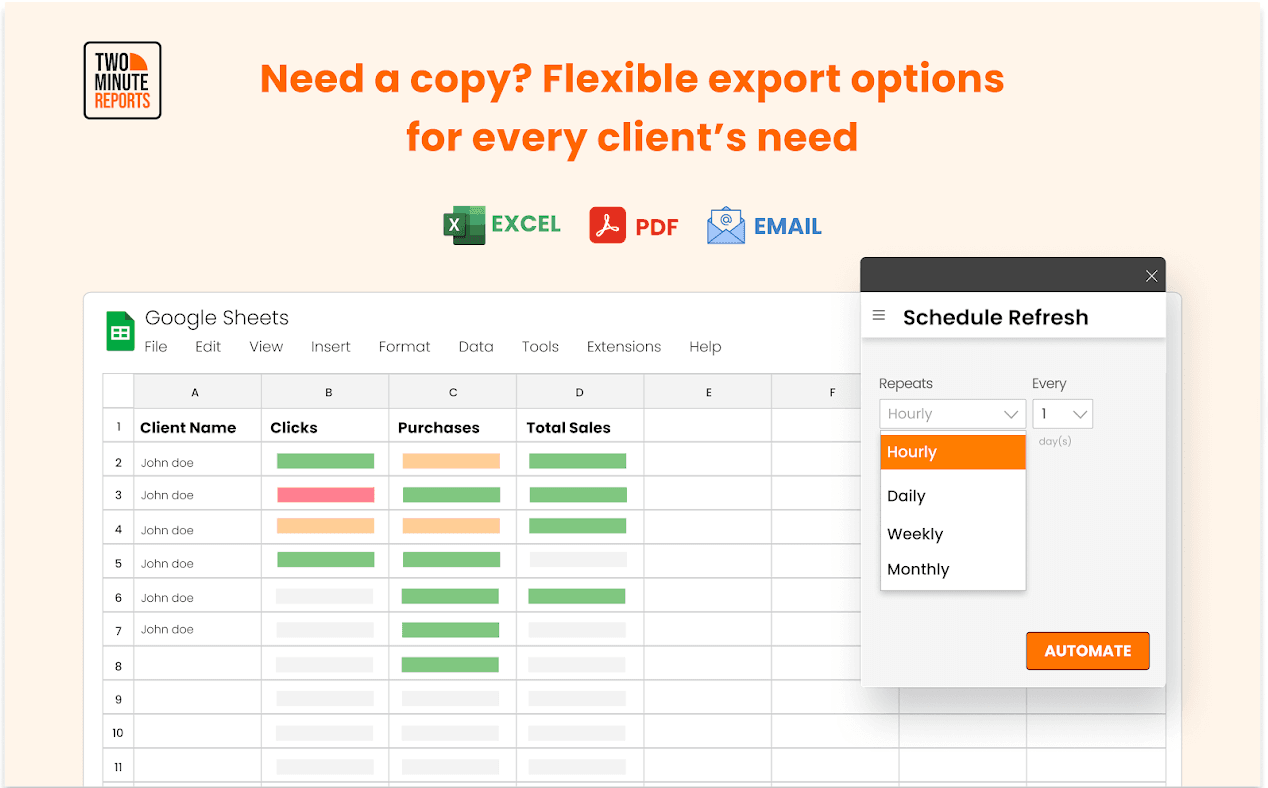
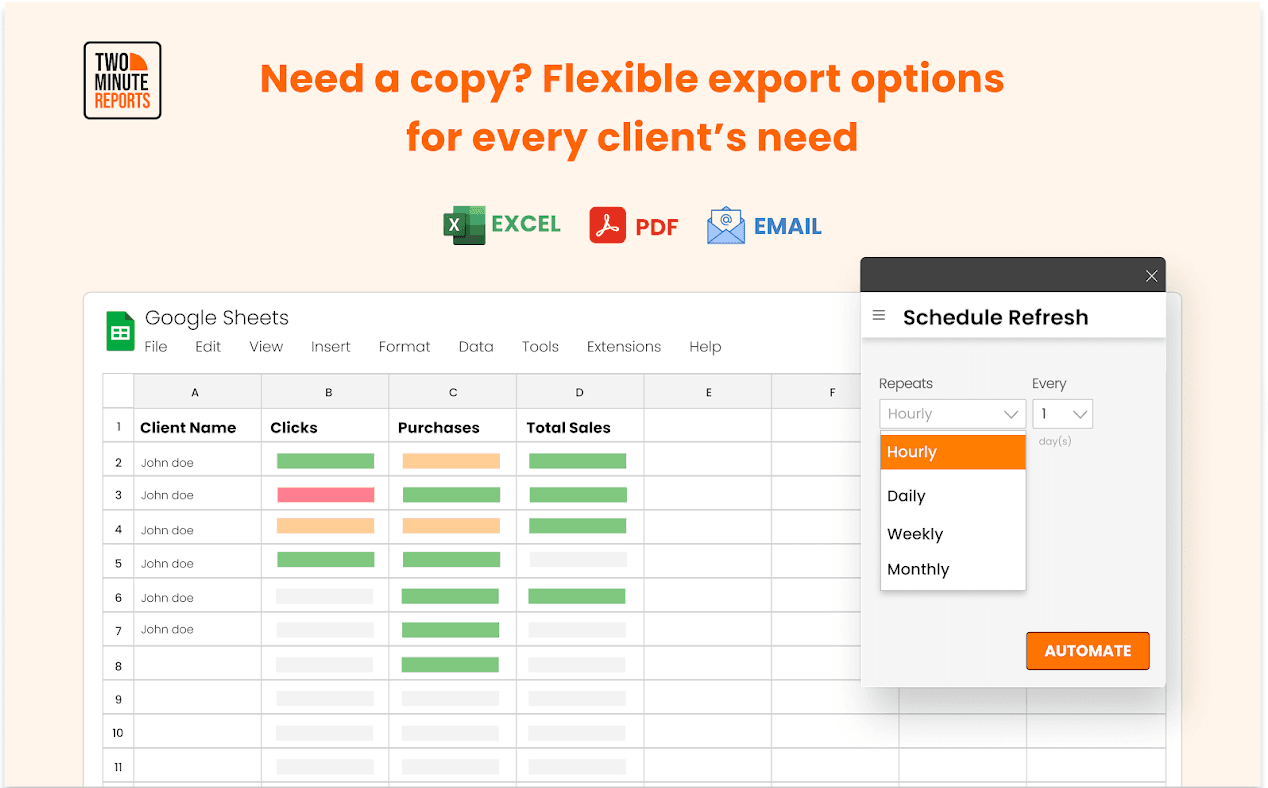
1. Connect your digital marketing platforms in Google Sheets or Looker Studio using Two Minute Reports.
2. Choose from a range of 100+ templates, such as SEO, email, social media, PPC, etc, based on your requirements.
3. Customize your ready-to-share dashboard with goal-specific KPIs, charts, logos, and other interactive elements to deliver branded, professional reports.
4. Set up custom refresh schedules, such as daily, hourly, weekly, or monthly, to auto-update your dashboards and keep clients informed on what’s happening in real-time.
And that’s it. You can build dynamic dashboards that reflect client-specific KPIs such as ROAS, CPA, conversion rate, etc, for full-funnel performance views.
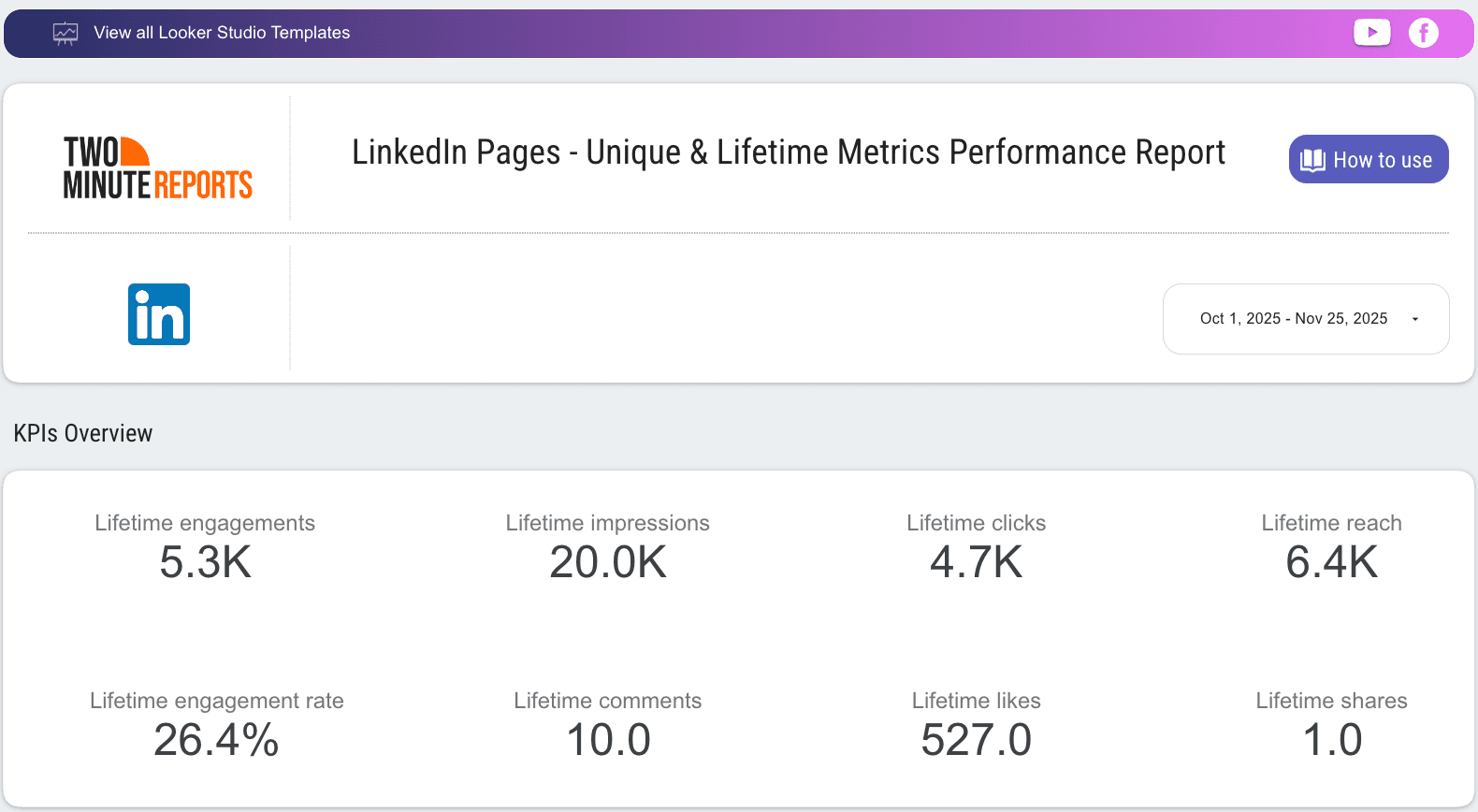
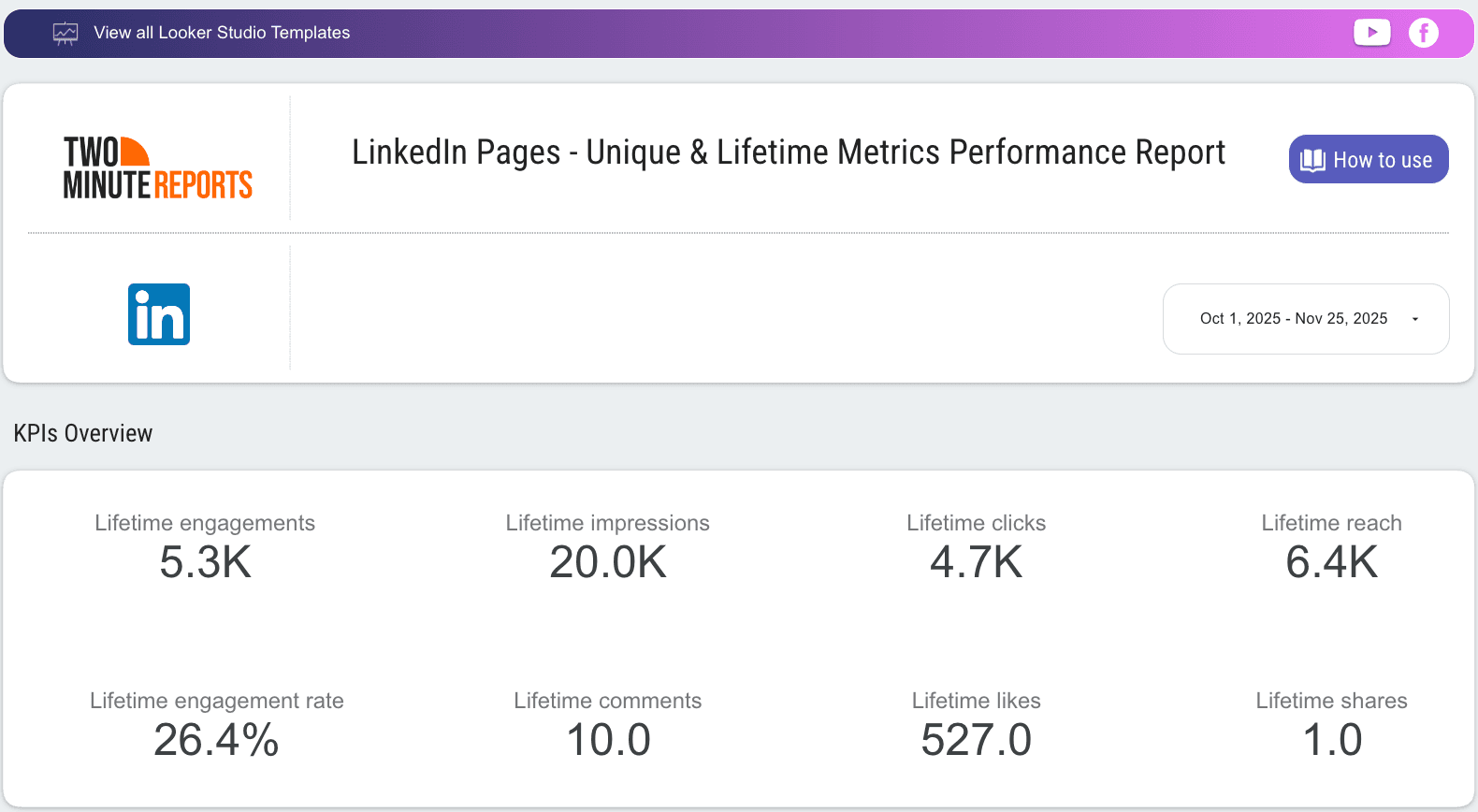
Grab our free LinkedIn Pages Performance template to track long-term trends and lifetime performance. Access comprehensive insights into unique page views, follower growth and geographic performance for informed, data-driven decisions.
Wrapping Up
The digital marketing landscape is constantly evolving, making it tempting to track a wide range of KPIs. But the key question is: Do these metrics contribute to your bottom line? If they do, great – keep going. If not, it’s essential to align your KPIs with your business goals and streamline how you track them for real, measurable impact.
For efficient, automated tracking and reporting, you can use Two Minute Reports. With integration across 30+ data sources, simplified multi-client reporting, and faster data syncing, it helps you identify what’s working, what’s not, and where you can optimize for better ROI.
When KPIs are tracked the right way, they reveal actionable patterns that drive growth. Sign up for a 14-day free trial and see how Two Minute Reports makes it easy to transform your KPIs into a growth lever.
Frequently Asked Questions
To drive meaningful results, focus on KPIs that directly influence your campaign strategy. The key KPIs include conversion rate, customer acquisition cost, return on investment, and engagement rate. This ensures you’re not just optimizing for traffic but for higher ROI.
You can use a custom dashboard from Two Minute Reports that helps you consolidate data from your digital marketing channels into one place, offering a holistic view of your campaign performance. This helps you visualize cross-channel trends in real-time, making it easier to refine strategies quickly.
Your marketing KPIs should directly support your high-level business objectives. For example, if your goal is brand awareness, focus on reach, impressions, and engagement. If your goal is to drive sales, priortize metrics such as conversion rate, lead generation, CLV, etc. Regularly assess whether your KPIs align with the actions that drive your business forward and modify them as your goals evolve.
With Two Minute Reports, you can directly connect 30+ platforms and pull data into Google Sheets and Looker Studio. You can fast-track reports and auto-update them on custom refresh schedules to keep your clients informed with the latest performance insights without any manual effort.
Yes. With access to 100+ templates, you can create personalized dashboards for each client or campaign tailored to the KPIs that matter. Whether you are streamlining PPC performance or social media reporting, Two Minute Reports simplifies client reporting and saves you significant time.
Related Blogs





Meet the Author
Shalini MuruganShalini is driven by ideas that create a tangible impact. At Two Minute Reports, she specializes in content that helps marketers optimize their reporting workflows. When she's not transforming complex data into meaningful insights, you might find her lost in a book, jotting down ideas in her notebook, or connecting the dots others overlook.
